Some music by Phil Nyokai James, on shakuhachi (Japanese bamboo flute) and ‘toy piano.’ It’s part of an improvisation, and it’s low resolution: my telephone recorded it…
It’s what I DO: shakuhachi and writing, and walking, for MILES out in the woods; moving, dancing…
This one is dedicated to Renee Good and Alex Pretti, murdered by ICE in Minneapolis:
It’s also the start of a tribute, to ‘Daddy and Mommy.’ They taught me how to write words and music! I’ve included snippets of Daddy’s own compositions, the ‘popular’ ones…
And a tribute to something else:
…the STROKE!
I had ‘the stroke’ about 16 years ago. I felt that I’d NEVER have the use of my right arm again, or walk without serious limping… or even talk… Well, I was learning to live through it. And gradually, gradually: AH! Yes, it took years of dedication, and THINKING…
And I came out way, way ahead of the game. I am a different person.
I feel compelled to write about my parents, the early days, and ME:
Buckley, Exeter, Schreiber – this one is about schools
Shakuhachi Journal – and learning an instrument
Forgotten Daddy – I’m NOT going to forget him!
Memorable Mommy – she was a Jewish victim of the Nazis
Church Music – no, it’s NOT really boring
World War One – the START of it… when will it ever END??
^^^^^^^^^^^^^^^^^^^^^^^^^^^^^^^^^^^^^^^^^^^
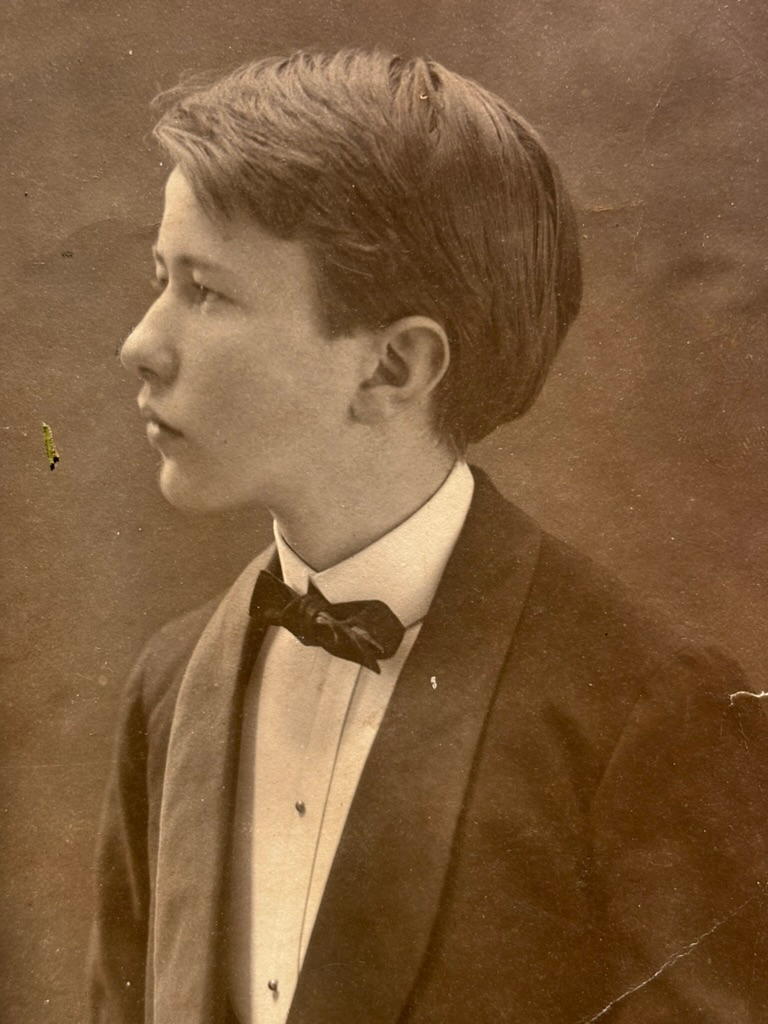
Oh, we were kind of LIKE each other, Daddy and me. He was an old, OLD composer; and I’d wear my fake glasses – ready for school!

He decided that private school was the right idea for me, and for Vivien, my slightly-older sister. He’d grown up poor, just about begging for work…
So here we were now, in the burbs of New York – we’d just moved out here. We didn’t have a fancy home, just a tacky suburban house. My father would walk with me SLOWLY around the neighborhood… and then that was too much for him.
And my mother, Helga: she was short, young, and beautiful. And she was German, a Hitler refugee – more of that later!
At Buckley Country Day School I met the ultra-rich – and I met the ‘regular’ guys too. And I became a geek, a nerd, a dork, a dweeb… a very smart one, but clearly one of those weird guys. And yes, I usually was a shy and sensitive little boy… but not always.
I tried ‘sports:’ soccer, hockey, baseball… I wasn’t any good at them.
At home I was alone a lot of the times. I read, I’d improvise piano pieces, or collect stamps, or do magic tricks, or make films – I loved making films. The slick athletic boys would sometimes laugh and sneer at me. I didn’t really care.
But occasionally, out of the blue, I’d get angry with my parents. There was a sort of deep, deep anger in me. My mother was generally pretty nervous… and I sometimes felt that they couldn’t figure out WHAT they were doing wrong…
Maybe I’d go to my room and slam the door and wait a while, until it had calmed down – and then I’d write poems. I held the pencil in the air, thinking, trying to get it right… I know that you liked my poems, Daddy… yes, I totally IMITATED you:

______________
Courtney and Bruce were two friendly nerds of mine, in about second grade. One of them, Courtney, carried a briefcase; the athletic boys would laughingly steal it and hang it from the ceiling, calling him ‘double-o-seven.’ We’d go outside in the bright sun, we ran and ran, carrying branches that represented the guns of Nazis and the U.S., shouting loudly as bullets – eh-eh-eh-eh-eh. My father called us ‘the 3 stooges’ and that’s exactly what we were: three damn dummies!

Later Courtney worked for NASA and became good friends with President George W. Bush. And he went to jail for three years, serving ‘his own financial interests’ and making false statements to investigators right and left. Sigh.
Anyway: I used to go to evening dance-class, all dressed up in my Brooks Brothers suit. The girls didn’t give a hoot about what a nerd I was, they just knew me – and we DANCED! Yes, I learned the Lindy, the Tango, the Bunny Hop, the Twist, and I just LOVED IT! Ah, the girls with their white gloves, coming at me with smiles…
And I wrote and wrote, poems, stories, whatever…
I learned a lot about writing from the playwright John Ford Noonan. He was our seventh and eighth grade Latin teacher – amo, amas, amat. I’m not sure he knew a lot of Latin, but he was a fantastic teacher! His own writing was somewhat sentimental, and at the same time it was ‘avant-garde’ and funny. Yes, it is VERY weird that he taught here, in his somewhat ragged clothes.
Class started, and he stood halfway in the hall with a cigarette; then suddenly he would say ‘Would you like to hear some of my play?’ Sure! And he read the dialog – high for the women, low pitch for the males, searching, discovering… His expressions would get stronger, every piece of dialog would have a secret. ‘Whad’ya think?’ he asked sheepishly. ‘Is it all right?’
Oh YES it’s all right!!
And I followed in his boots: I actually wrote a novel, a very weird one, entitled 53 Bones and an Appendix. He loved it!
So Noonan moved to California, then came back in a year or so; he was dressed now as a hippie. He came to our house once – I think my parents were trying hard to find a connection between me and cheerful Noonan.
Yes, Daddy, I started to drift away from the musical ‘you’ and toward the youthful Noonan…
Oh I just remembered, ninth grade, Noonan had just come back, and I was trying to make ‘avant-garde’ films. I borrowed a 16mm camera (Bolex) from a schoolmate and called Noonan to see if he could bring a couple of young actors to work one afternoon. ‘Sure!’ he said gleefully. So they came and did a scene I had written – ha, it was pretty passionate, lots of kissing. And then when they had left I asked Noonan to lay down and roll downhill in Central Park – I was shooting in slow motion… Damn, I wish I could FIND it!
Noonan and I drank and drank, a few years later that is. We went regularly to a bar called Jimmy Ray’s, filled with drunk TV actors – you’d recognize them! I was working on plays, not films any more – and I tried to act…
And one day I HAD to just leave him, without a word: I’m NOT going to be that kind of miserable drunk! Oh, he had a couple of very successful plays, but…
…then I heard he died a few years ago, not so old, at a home for actors.

I had kept a few good friends, like Jane Hallaren and Carol Kane, and traveled to Puerto Rico with Jaime Sanchez… Read below: I was 20 years old; I was ‘the boy’ in Waiting for Godot. I played my soprano recorder, with Jane and Carol in the male roles – VERY unusual – of Vladimir and Estragon:


Carol and Jane…
Jaime in ‘The Wild Bunch’

______________
OK, back to Buckley Country Day School:
Courtney and Bruce and I were no longer ‘the 3 stooges.’ I was in the 9th grade now, and two Jewish boys, Selig and Tom, hung out with me. We were the INTELLIGENT stooges!
One Monday morning at assembly Selig played guitar and sang a protest song, and I read a ‘peace poem’ by Archibald MacLeish. Needless to say, we were scowled at by the teachers.
Our hair was getting longer, our clothes messier, our cigarette-puffs more and more constant – and a couple of drags on a ‘reefer’… AH!!!
And I kind of had an interest in girls; they were SO mysterious to me! I had a secret crush on the sexy young Patty Brink – and once again, sigh: she eventually became a member of Ronald Reagan’s gang (like Courtney!)… and she died…

But ahhhh, 9th grade!! I was all over poetry! John Giorno – friend of Allen Ginsberg – had phones you could call and get today’s random ‘Dial-A-Poem’ poet. I called it a LOT – even got a couple of friends to call.

I guess that gives you the picture of what it was like in the 9th grade: I was always trying to find it, to FIND it…
______________
OK, Exeter: the la-di-da of the Phillips Exeter Academy. I was somehow different at age 15. I think my parents sensed it too. They sent me to Exeter and hoped it would do me some good. HA!
I went to Exeter in tenth grade and got kicked out, sort of, in March or April. More about that later. Meanwhile there is just one picture of me in Exeter’s yearbook. I look like my mother, all VERY out-of-focus, and CONFUSED:

Exeter was just like Buckley, only much bigger, and a little bit wiser. But without girls.
And sure enough, three of us boys were eventually just like the ‘three stooges:’ Tim, Thatcher, and Phil. But to me it was somehow more than that: our circle was becoming a sort of mini ‘love circle.’
Thatcher was the nervous one, handsome, smoking like crazy, giggling sheepishly. He was always well-dressed.
And Tim: wow, he was UNUSUAL! Short, slightly pudgy, extremely white… He dressed messy, like me, and his ultra-blond hair was a mess too, falling all over his face. And when he laughed, which was pretty much all the time, it was a cheerfully loud unique message: it screamed YES!
He was also the son of a diplomat, stationed in India; he brought, literally, pounds of hashish without ever being searched. Those were the days.
So we got stoned – a lot. We’d go down to what they called the ‘buttroom,’ where cigarettes were allowed, as well as GREAT talking. We’d pinch off a tiny bit of hash and roll it with tobacco in one of our cheap ‘rolling devices’ – they were popular back then. I read my poetry loudly. And I remember one long-haired boy singing all the time with his guitar, John Sebastian’s ‘Do You Believe in Magic,’ ‘Summer in the City,’ or ‘Did You Ever Have to Make Up Your Mind…’
But Tim didn’t like the Lovin’ Spoonful: instead he listened to Frank Zappa, Ginger Baker, the Fugs, the Velvet Underground – the ‘weird’ stuff. In fact he started a small poster business, Joy Posters, where he sold stuff you’d hang on the wall.
And we took LSD. I remember sliding down the snowy hill on plastic cafeteria trays, cracking up; or biking at dawn, in the absolutely freezing weather; or the guy at the coffee-stand shouting ‘Make it Garbo!’ and giving us half-steaming milk and coffee…
Tim had two old grandmothers, in Boston and in Marblehead. We’d go visit them on weekends. And to be frank, we had a blast. Often we were pretty out of it, though. I remember how Tim dressed in a beat-up long gray coat, carrying a hockey-stick on his shoulder, attached to a string full of laundry clothes…
Ah Boston, the Commons: in those days it was full of guys who were crying ‘grass – hash – LSD’… and I remember crossing a busy staggering street, laughing, with my Singer battery-powered record player crying out its Captain Beefheart… There seemed to be hundreds of cars, blasting away on their horns…

‘Gracious, you look just like Midnight Cowboy!’ one grandmother would say to Tim and me.
Yes, we were slightly gay, even though we wouldn’t talk about it. Oh, we would maybe touch each other, and maybe hold hands for a moment, but we didn’t want to say anything!
The Boston grandmother owned her own house and rented the tiny top floor to a member of Project HOPE. He was a handsome man, in his twenties, and CLEARLY gay. He’d call us up to his apartment and talk and talk and TALK, and then he’d get embarrassed that he was talking to 15 year olds. The three of us would then run downstairs and laugh our heads off, VERY stoned.
______________
At first, when I arrived, I volunteered at a Manchester elementary school – the ‘retarded kids,’ as we offensively called them. But they were FUN!
And I marched at a silent Vietnam protest…
But I was starting to ‘fade away,’ getting HEAVILY into more drugs.
Of course not everyone was like that! Franklin Pierce had gone there, a ‘fine man.’ And Abraham Lincoln went there to see his son, a student at Exeter. He even gave a speech, right at Town Hall.

But Exeter SHOULD have taken care of teaching me about:
farming, gardening;
cooking;
constructing buildings;
the arts from other cultures, India, Japan, Iran...;
and yes, sex;
oh, AND:
family, yes, FAMILY!!!
But they didn’t teach me about those things.
______________
Tim visited once to our suburban split-level home. He was dressed as usual: the hockey stick, the dirty laundry bag… and he truly shocked Daddy. His soiled socks were littered around the house, his cigarette ashes would have a hint of hash… and Tim wanted LSD. I secretly said I would get some, but I just didn’t know HOW to get it…
Finally Helga said he had to go – she was really furious! And so we went back to Exeter…
TIME was catching up on us…
The hours! Going alone, walking for an hour or two through the beautiful woods, feeling my tense brow, feeling Tim and Thatcher… maybe they’re off holding hands…
There’s a story that keeps haunting me, Nathaniel Hawthorne’s ‘Young Goodman Brown.’ The young Brown is walking through the woods at night, falls into an eerie forested sleep, then wakes up bitterly: he has lost faith in his wife, faith in salvation, and faith in human goodness. Herman Melville called the story ‘as deep as Dante,’ Kurt Vonnegut says it’s ‘one of the ten best stories written by an American.’ That story STILL rocks me, as it did then.
So I was out in the woods all depressed with Young Goodman Brown, toward evening. I walked to my dormitory…
And sure enough, Tim and Thatcher were walking toward the dorm too… and yes, holding hands!
I went from depression into a deep, DEEP depression. Here’s what I ended up writing in my ‘prose and poetry book,’ 1981:
…another great big lie: I said I’ve been walking along Swayze Parkway and decided to lay across it waiting for a car to run me over. My last semester’s French teacher had driven up, saw me and carried me to the infirmary where I was partially questioned and then released by the school psychiatrist. Ha! None of my friends could really have BELIEVED this story, and yet they played along…
That night I was called to the dorm teacher’s apartment. ‘I hear you’ve been playing with your life’ Mr. Arnold said. He asked if his wife could stay and be part of our little chat; I replied with more spirit than I’d said ANYTHING in months, that I was sorry but that was impossible.
The guy was scared shitless of me but I was scared too, my knees were trembling, my teeth chattering. I told him I just wanted to go home to my parents.
He too felt that was best and that he’d give me a ride to the bus station. But we did not end up at the bus station: instead it was an infirmary. I was quickly strongarmed by nurses into a room.
I had bad dreams for the two days they kept me there – and no number of pills would shake me, I trembled relentlessly! The administrators wanted me to admit my lies; they showed the school in an ‘unfavorable light.’ Finally friends were allowed to see me and they brought cards and gifts you bring to a sick person when you’re afraid you’ll involve them.
Finally my mother: she picked me up and sounded cold and distant; she didn’t know HOW to act. I must have added half a pack of cigarettes on the way home. Tim phoned me a few days later – he also informed me that the Dean of the school had told a faculty meeting that we were ‘possibly sexual.’ I was outraged. I ran for pen and paper…
As for Tim I don’t know where he is now. I was surprised to hear at one point that he’d run off to Georgia with a woman of all things…
My father didn’t know WHAT he should say, any more than my mother. I went to a psychiatrist, just this one time. I said to my mother that I REALLY didn’t like it. And she suddenly screamed, LOUDLY:
‘I AM NOT THE CRAZY ONE!!!’
I paused for a second – and then I laughed and laughed and LAUGHED!
______________
Things were looking better now. I would be attending public school, the Paul D. Schreiber High School, or ‘Schreiber.’
I showed up there in March or April, 1970. It was morning, kids arrived by the hundreds and hundreds – there were buses, cars, bicycles, walking… The hippie-looking boys and girls were crowding together, joking around – they all seemed to know each other. And quickly and happily I joined in. At night there were cigarettes, occasional joints, beer, and lots of laughing. It felt comfortable there, it felt usual – not the wild-n-wacky (and dark!) LSD of the Exeter past.
I stayed busy writing, but most of all it was MUSIC. Yes, I was getting back to it, touching the piano again. And the other musicians at Schreiber were really great. I was friends with guitarist Michael Thompson, who went on to become an excellent studio musician; and Dan Bartlett on bass; and Melissa Mann on flute; and Missy Meell on cello, today at the Orpheus Chamber Orchestra; and Susan Quittmeyer, singing at the Metropolitan Opera; and Evan Sarzin on sax, and Paul Deyo on trumpet – and Peter Pickow, I’ll tell you about him later. Well, I could go on and on: true musicians.
Let me digress for a second: I remember that my father, when he was the same age (17) as me, wrote his first published piece of organ music. Organ was very popular then, in 1907, before radio. Here’s what he sounded like in his sweet, but corny, way – his Pensée d’Automne, played by David E. Lamb:
OK, I too was just 17. But what I saw was the sudden absurdity of the world, and Vietnam, and YOU NAME IT! Strangely, I was happy now, I felt somehow FREE!
So I wrote part of an orchestral piece for eleventh grade, and Evan Sarzin wrote part of it too. It was called ‘Siva – a Study in Dissonance.’ We played it in Atlantic City, messily and sloppily – even recorded it. Here is a BRIEF recording of it – the whole thing is a lot longer:

______________
Peter Pickow: he and I were kind-of best friends for the year and a half I was there, and later. I used to go over to his house all the time to play music; and he, too, had great guitars and a great voice. And a VERY cool house – lots of wood everywhere, unlike my parents with their plywood. I wish I LIVED there!
I got to know his father well, the photographer George Pickow, and his mother too. She was a musician who had long ago moved from Kentucky; her name was Jean Ritchie.

George and Jean…
‘I see folk music as a river that never stopped flowing,’ she told The New York Times in 1980. ‘Sometimes a few people go to it and sometimes a lot of people do. But it’s always there.’
Johnny Cash recorded her ‘The L. & N. Don’t Stop Here Anymore’ and Emmylou Harris performed her ‘Sweet Sorrow in the Wind.’ Bob Dylan has cited her as one of the folksingers he listens to. Her own song ‘Black Waters’ took aim at what strip mining has done, and her album ‘None But One’ received a Rolling Stone Critics Award.
Jean was a very, VERY cool lady. But Peter was EQUALLY fun. Oh, we partied and drank too much. But what the hell, it was FUN – and you could ignore the world…
^^^^^^^^^^^^^^^^^^^^^^^^^^^^^^^^^^^^^^^^^^^

Phil Nyokai James: my middle name is Japanese, for the sea.
It was given to me many years ago, when I became a sensei (sen-say, or teacher) of the shakuhachi, that beautiful bamboo flute. Until then I was Philip Dylan James – named, after birth, for the Welsh poet Dylan Thomas.
I look up across the room: there it is, the shakuhachi; I used to teach it, before my stroke; now I have just one student. But that’s OK.
The stroke came roaring through me, it snuck up like a DEEP powerful force, about 16 years ago. Well, there’s just one thing I could do: play shakuhachi! It wasn’t perfect, just a note or two, but…
…and happiness snuck in, little by little, little by little… HAPPINESS!
______________
1975: my Daddy was a ‘classical composer’ and an old man when he died. He hadn’t ever heard a shakuhachi playing, but he would have absolutely loved it!
Anyway, he left me 11,000 dollars – and I was elated! I was twenty-one years old and it was burning a hole in my checkbook. Hm, what should I DO with it?
Then suddenly I knew, oh yes, I KNEW:
I was eating at a macrobiotic restaurant in NY and saw a sign advertising shakuhachi: ‘Ronnie Seldin, shakuhachi lessons…’
Yes yes YES!
So I went out to Flushing, a long train ride and a long walk, twice a week. Ronnie was just back from Kyoto, where he’d studied shakuhachi with Kurahashi Yōdō I.
Kurahashi Yōdō I was born in 1909. In 1973 he established the ‘Mujuan dojo,’ or shakuhachi school, and he was director of the Kyoto City Cultural Society.

When Ronnie got back to America he was ‘sort-of Japanese.’ He basically lived it, at least at first.
Here’s what Ronnie looked like back then.

And here’s what a particular notation might look like:

Don’t worry, the notation isn’t at all difficult. But if you’re studying Japanese music – specifically the ‘honkyoku’ [HOHN-kyoh-koo] or beautiful old solo music – well, you probably need a teacher…
______________
Ah, the seventies in New York City, before shakuhachi had really come:
It was truly idyllic. I lived on the Lower East Side and paid $75 in rent; later it went up to $85. OK, it was kind-of sleazy, but so what: it was HOME!
And it was FUN! You could just walk along the street and say hi to everybody, the poets, the artistes – and I was starting to write back then, plays of all things, and a little piano music…
I moved in with Heloise Gold, a beautiful dancer. I was, admittedly, a part-time drunk: she changed that! Well, at least for a while.
I started working on weird piano ‘sounds’ and weird instruments – and I was feeling it! And that’s about the time I took up shakuhachi.
The lessons, twice a week! Ronnie and I were sitting on the floor across from each other, with a short table between us. We’d start by bowing to each other…
I realize now that Ronnie had little ‘shakuhachi training,’ and just with Kurahashi I. That’s OK: SOME of his interpretations are brilliant. Ronnie was a strong part of what became ‘American shakuhachi.’
But I couldn’t really play the shakuhachi yet, it was all new to me…
One night we were doing a performance at a loft – that was how you did it, at a loft. Deborah Hay, the dancer who lived in Austin, was there that night. I didn’t know who she was, but she just about smiled the whole time. Afterwards she introduced herself and we traded phone numbers. Then a day later she called with a proposition: we would give a performance in Austin AND babysit her five or six-year-old Savanah, for at least a couple of weeks while she was away on tour. And we could find a place and move to beautiful Austin if we wanted.
Wow!
Hm, what about Ronnie? Well, we COULD bring the flute along… and the notation…
Yes! We said YES!
Deborah Hay – 1979

______________
The shakuhachi was becoming MY life… Oh, it had to ferment, it had to take its time… but gradually: AH!!!!!!
And it’s hard to describe beautiful Austin, its magic – at least that’s what it was like in the seventies and very early eighties. I bought a used 1967 VW van, light turquoise and as hippie as you can get; I traveled, all around Texas and New Mexico; I took odd, ODD jobs; I lived in a tipi for a while; I’d get with people and sing outdoors; I tried to teach them a little shakuhachi; and yes, I toured with Deborah, in New York, Washington DC…
Deborah LOVED LIFE, through dancing – her face always shone, always gleamed! And here’s a program I just found – it includes Deborah, Heloise and myself, on shakuhachi:

with Joseph on sax, Ken on flute, Karen on violin, and Phil on voice, accordion, and shakuhachi
______________
But, BUT…
Oh, there is joy, there is happiness, but I am somehow depressed!
And I kept it secret… sort of. I would get depressed and kind of fierce as well…
And I didn’t completely realize my unhappiness until I had a stroke, in 2010. Then I just studied it, the pain, the anger, the ‘illness,’ alone for years…
…and slowly, slowly I came back…
…back to childhood…
…and yes, to ADULTHOOD…
…and there it was, there was the secret beauty of the shakuhachi, howling YES to me!
For the past few years I’ve been smiling YES – I am one of those so-called ‘stroke victims’ who has YES in his smile. And there is something wonderful about the shakuhachi: it doesn’t make a ‘Western sound’ at all, nope. But it curves the air, carves a realm, weaves a sound that is beyond anything I’ve heard before.
Yes, the shakuhachi IS my altar; it asks me for my ULTIMATE respect. And it sings sings SINGS!!
So it was the late seventies/early eighties; I drove my ’67 turquoise VW down to Big Bend, alone. It was the summer, no less, and the van had no AC – but who cares?? I was YOUNG then!
Needless to say, the temperature was sweltering. I had to fall asleep sweating in the 100-plus evening. But I felt incredibly happy, for a change. I loved being alone. And I loved PARTICIPATING in the sound of the shakuhachi: I played it late at night, and it went howling across the riverbed – and the trees were talking back to me!
I thought about what ‘music’ had been like as a young boy – how I hated practicing piano in front of this or that teacher, those bitter money-hungry men. I remember the first piano teacher I had. He would flick his cigarette and DULLY repeat the words ‘wrong, wrong, wrong.’ My Dad had to take over, he taught that music was beautiful. But I would have to find my way into it. Yes, my OWN way.
So shakuhachi came to me! And Ronnie Seldin, like SO many shakuhachi teachers I later studied with (and continue to learn from) was as kind as they come. That’s what I felt at Big Bend. I was truly, truly happy – ha, for a while!
______________
Well, Austin was great, but it grew up SO fast that I had to really think about it.
I met a fascinating woman named Kim. She was just becoming a midwife, and she was kind of a hippie, like me. So we got married. And here we are with our brand new baby, Sierra. Later on Aaron would be born.

We lived in a trailer for a while, across the park from a gun-toting manager. It wasn’t exactly an easy time, for ME anyway.
And we traveled around the US, stopping for instance at a commune near Spokane. I remember once leaving our cloth diapers by mistake out of town – we were just like that – and having to wire home for a few dollars.
We decided to move. I had been reading about communes with available pieces of land, and for some reason I was attracted to Missouri. So we moved there, borrowing money from my mother. Yes, we were in a trailer AGAIN – a ratty old pink one. But the land itself was beautiful, the sun and moon – and we had eleven acres of our OWN.
And yes, I had my ups and downs, and my occasional angry depression. I realize NOW that it affected both Kim and Sierra, and maybe later Aaron…
I just found this old newspaper article, from 1986. It shows me playing shakuhachi in a vast field, and the headline is: One Man’s QUEST: Phil James finds happiness is simple.

‘Phil James plays the shakuhachi flute on a hillside farm…’
YES! ALONE, hearing that beautiful sound…
______________
The years went by. I was kind of a shakuhachi player, but really an ‘amateur’ as they say.
We bought a house in Columbia, MO. I started making money, lots of it, in the world of software. And I started writing technical books:

I traveled. I even learned to fly a plane. And I drank.
But it meant I could get plenty of lessons from Ronnie’s cassette tapes – and by listening to dozens of Japanese CDs, and TRYING to get the sounds by myself. Believe me, it was a struggle – one could call it a sweat – but one that truly SHINED, with a sunlike smile!
Ha, here I am with a sunlike grandson Josh, a long time ago:

OK. So I went to Japan with Ronnie, met with other ‘famous’ musicians… and Kurahashi Yoshio, later known as Kurahashi Yōdō II. Kurahashi Yōdō II was the son of Kurahashi Yōdō I, Ronnie Seldin’s old – and long gone – teacher.
Kurahashi Yōdō II

We became good friends. He was, and IS, a tremendous gift to me: I LISTEN.
Here’s a biography of him from 2017, in the Kyoto Journal:
Studying under Matsumura Homei of Nara, in 1976 he performed his first solo concert, winning the Osaka Cultural Festival Award. Four years later he became director of the Mujuan shakuhachi school founded in Kyoto by his father, and shortly afterward began touring throughout Asia, Europe, Israel, and the U.S. Since 1995, his annual intensive classes throughout the U.S. have become very popular. His sense of humor and generous attitude are well known to his students (who simply call him ‘sensei’), and to many others who enjoy traditional shakuhachi music. Today, because of his exceptional technique and a wide repertoire bridging traditions and cultures alike, Kurahashi Yodo II is sought by composers and musicians of many genres wishing to incorporate shakuhachi into their music.
When I was in Japan there was a soda there called ‘Sparkling Beatnik.’ I kind of liked the name. So I started a record company called just that, Sparkling Beatnik. I even had a ’67 gold sleek sparkling Mustang, with the logo taking all of the back windshield.

(Hm, looks a bit like Ronnie… )
And Kurahashi Yōdō II decided to put out his first album on Sparkling Beatnik records. He recorded the album in one or two days at my studio, and he sat in our kitchen drawing the cover. The CD received from New Age Magazine the best ‘serene’ music of 1999.
…ah Kyoto, and its beautiful temples!


…he even created another Sparkling Beatnik CD, Aki No Yugure, together with Wu Man on Chinese pipa…
______________
All right, here it comes, the reality: the stroke!
I was on vacation in Arizona, January 2010, with my new wife Lara; we lived then in Portland, Maine. I was giving shakuhachi lessons, lots of them, once every two weeks in Boston, at MIT. Lara was seven-months pregnant; I was driving us somewhere around the Grand Canyon.
What was I feeling? Well, I somehow felt uneasy, like I was backing out of everything… it was just like it had been in the old days: that strange sensation of depression was clearly right here, right now…
And I got ‘the stroke,’ weaving around, the car SCREAMING, Lara screaming too…
I won’t bother you with the fevered event, it was pretty damn weird – helicopter, me talking gobbledygook, fainting…
But there is one thing that was absolutely significant to me during that long hospital time: the shakuhachi! Yes, I could actually play the thing, much to the complete surprise of the medical gang. Oh, I didn’t play all that well, but I played. And a deep, DEEP smile was passing through this bent body, a HAPPINESS smile!
Yes, I’m an ‘expert,’ an expert at shakuhachi. I have thought about it SO deeply…
Sixteen years of ‘strokeness.’ It sure feels difficult at first, but gradually it’s OK… and if you’re really lucky, it feels like PEACE. People who have gotten the stroke talk about it in journals like this, and talk about it powerfully and honestly: Agnes de Mille, Ram Dass, Jill Bolte Taylor, May Sarton… ALL are experts, I agree, BRILLIANT experts!
I have eliminated a little at a time. I don’t have a car, or a license. I don’t drink. I rent an apartment, right next to the woods. I walk and walk, and I run, and I write. And yes, I play shakuhachi every day: AHHHHH!
It was a WAKE-UP CALL:
First, the stroke itself: it was a message to me. I needed to think think THINK… for years!
Second, the booze. I HAD to stop that habit, had to get off that lonely train…
And third, AGE: what a wonderful time! It GROWS on you, it SETTLES down… the colors are DEEP, and the sounds are CALLING…
Yes, a WAKE-UP CALL!
I feel PROUD. I was given a ‘Grand Master’ title this time around. Oh I know, I know, it’s just ANOTHER certification – but I don’t care, I feel PROUDER THAN HELL!


^^^^^^^^^^^^^^^^^^^^^^^^^^^^^^^^^^^^^^^^^^^
1.
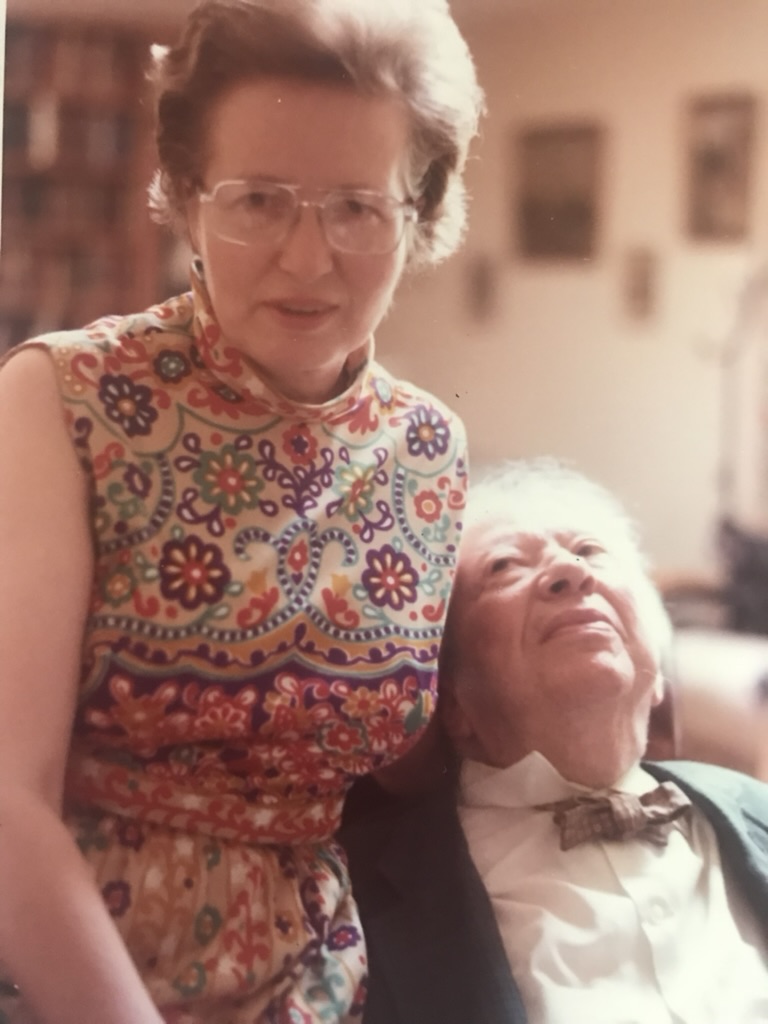
I’ll bet you haven’t even heard of Philip James, the ‘classical composer.’ Well here he is, my ‘Daddy.’ He was an old, OLD man. Here he is with my Mom; I was just a teenager:

I cried and unfortunately I craved his death. Oh, he was a great old man, truly great, and funny…
but TIME passed away…
He died, and I was utterly broken.

Ah, the old days! I am remembering a couple of things about him, hints about what it was like in the thirties and forties, Schuller, Babbitt, Herrmann…
______________
Gunther Schuller, Milton Babbitt, Bernard Herrmann – yes, the OLD days of composers in New York.
Composer Gunther Schuller would have turned 100 – he died in 2015. He was a classical and jazz composer, a conductor, a horn player, an author… And he recorded with Miles Davis etc., and received a couple of Grammy Awards and a Pulitzer Prize and a MacArthur Award and and AND…

As a youth Gunther attended school in NY, the well-founded Saint Thomas Choir School. I wanted to read more about him, so I started reading his autobiographic book from 2011, Gunther Schuller: A Life in Pursuit of Music and Beauty. And WOW: it mentions my father on numerous occasions. For instance:
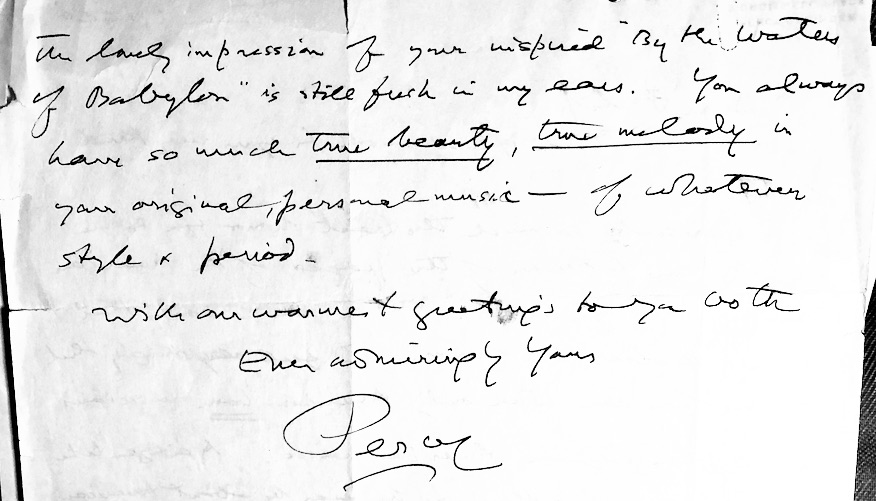
When we were handed a new piece, I could tell at a glance whether I’d like it or not by scanning the pages to see if it had lots of accidentals. If it was devoid of these, I knew it was one of those white-note compositions, and that it would be boring. Conversely, I got very excited when, occasionally, we were given highly chromatic pieces, even mildly atonal ones. I much preferred the more harmonically modern anthems and services of Philip James — especially his beautiful, poignant By the Waters of Babylon and The Lord is My Shepherd. I really loved these pieces, and if I had at this long distance to say which more or less modern music of the time I admired most at the Choir School it was Philip James’s music. Alas, he is now virtually forgotten.
‘Alas, he is now virtually forgotten.’
OK, Milton Babbitt:
Milton was a brilliant NYU student of my Dad’s, who later won JUST what Gunther Schuller won: a Pulitzer Prize, MacArthur Fellowship, etc. I’ll put on a recording of Babbitt talking about Dad, in an interview with Charles Amirkhanian. Babbitt mentions James’ radio piece, Station WGZBX – and I’ll talk about that later on. Meanwhile, ‘an extraordinary musician:’
OK, finally Bernard, or ‘Benny,’ Herrmann:

Hitch and Benny
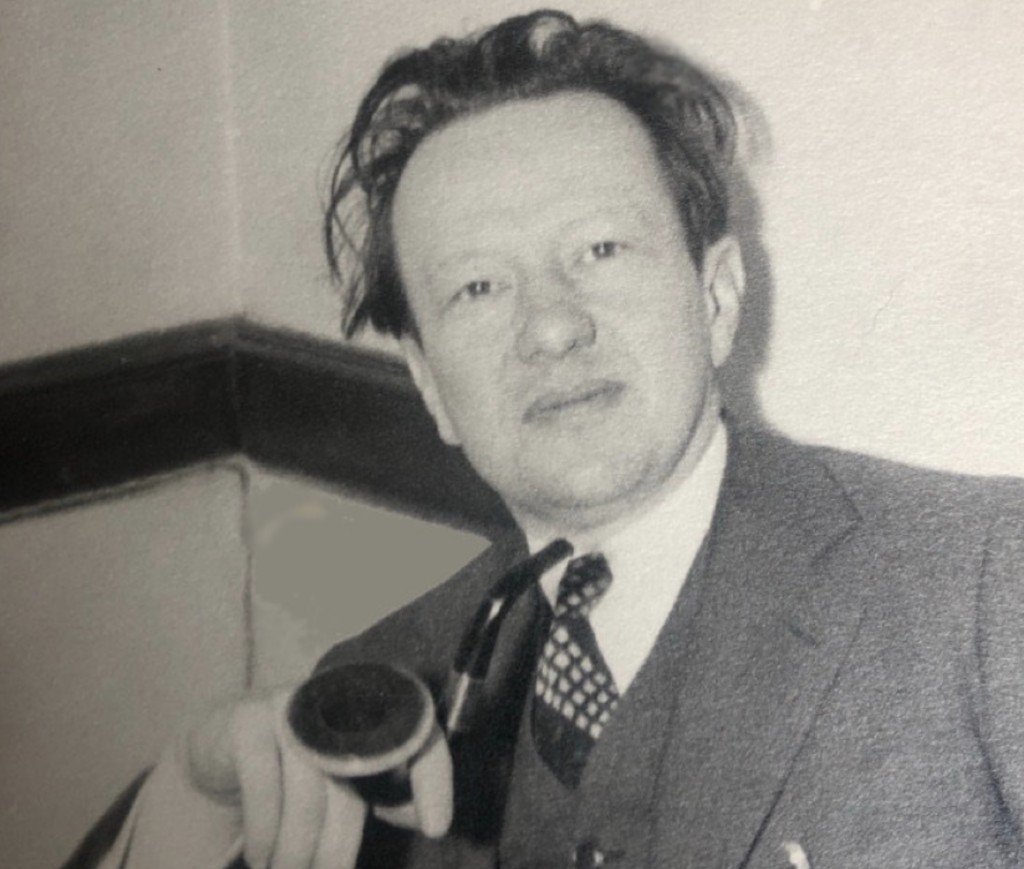
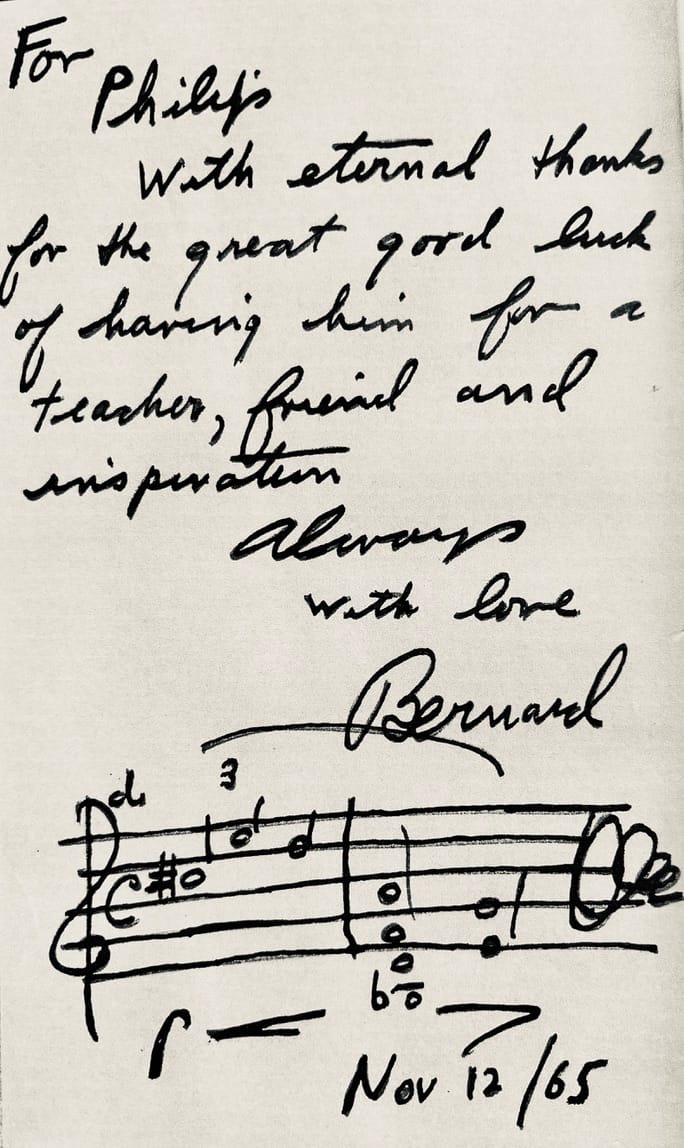
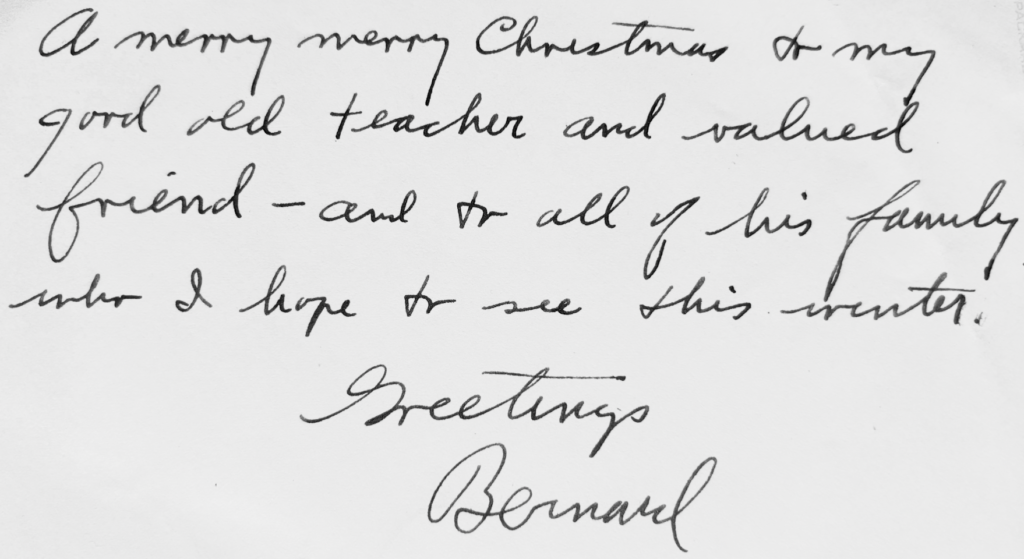
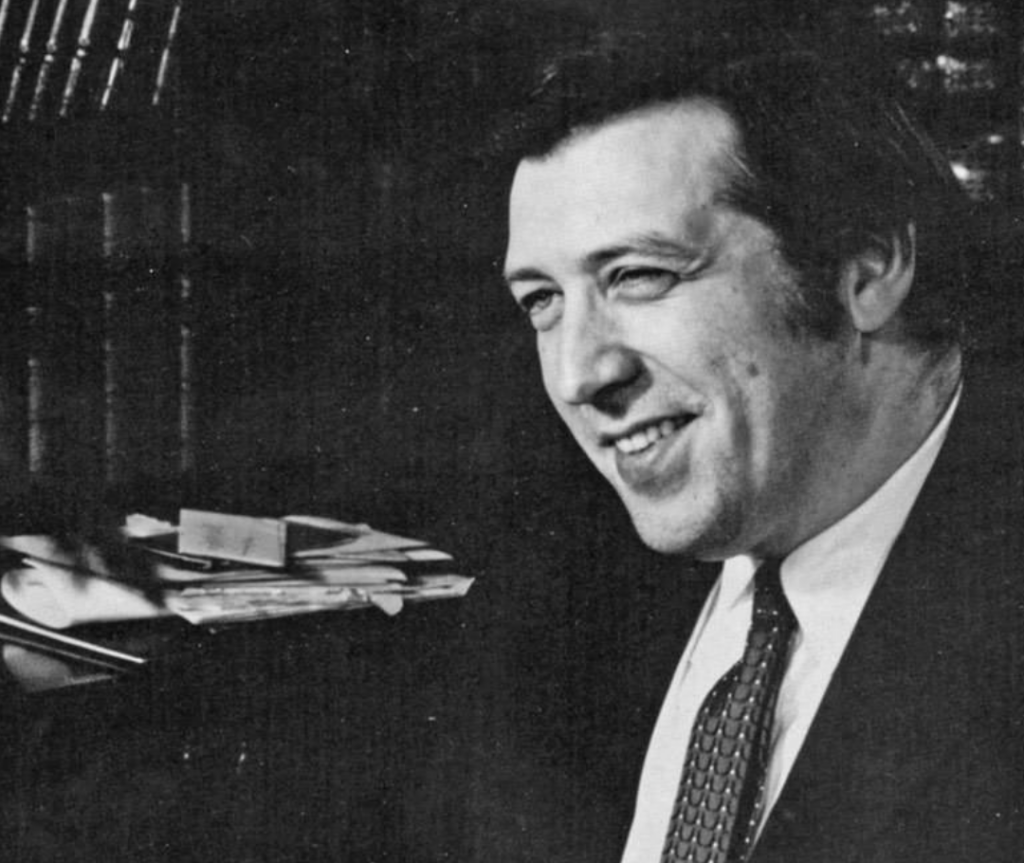
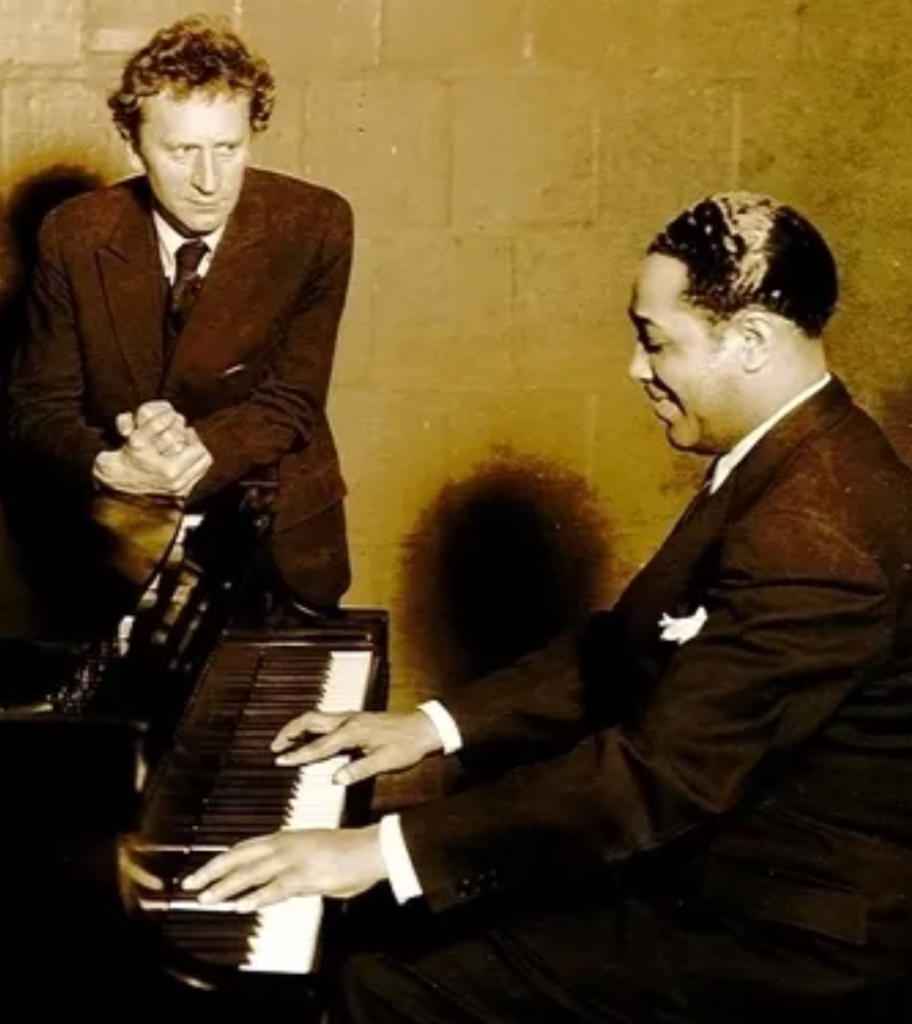
Benny was Dad’s teacher in composing and conducting – the same year, starting in 1934, that he taught Milton Babbitt. Benny wrote the music for Orson Welles’ Citizen Kane, and Alfred Hitchcock’s Psycho and Vertigo, and Martin Scorsese’s Taxi Driver… well, a whole LOT of stuff! Daddy led Benny’s first radio performance of his work, and they conducted each other’s pieces throughout the thirties and forties. There are a few hints of Daddy’s compositional skills right there in the Hitchcock stuff…


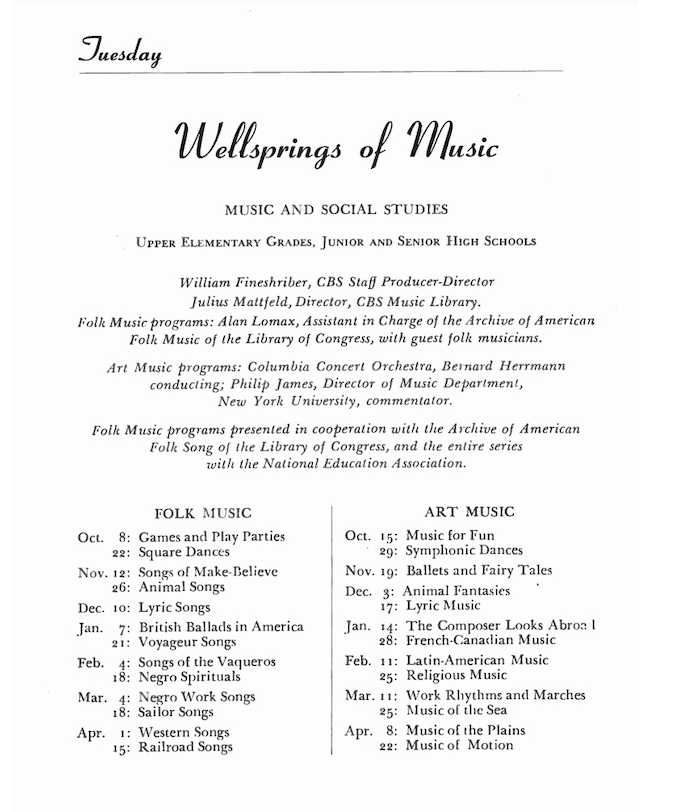
Tuesday mornings on CBS radio, at school: Bernard Herrmann conducting, Alan Lomax and Philip James commenting. Lomax had as guests Pete Seeger, Burl Ives, Lead Belly…
Or for instance Benny conducts a piece of Daddy’s, Scherzo from Kammersymphonie. It gets a pretty bad review from the NY Times, from the ultra-conservative Henry Hadley; but just about everyone (including Ives and Henry Cowell) got terrible reviews in those days!


Daddy used to limp around our house. He would sometimes be composing at the piano, or sometimes sitting in an armchair with a drink or two and a curious longing look. On the sleek plywood walls were autographs and paintings from the twenties and thirties, and medals from way back in World War 1… and he’d SLOWLY take a walk outside with our miniature dachshund named Seppel…
He used to leave one of his many ‘scrapbooks’ around, full of articles from the past, the distant past. I sometimes read through them; they were strangely fascinating.
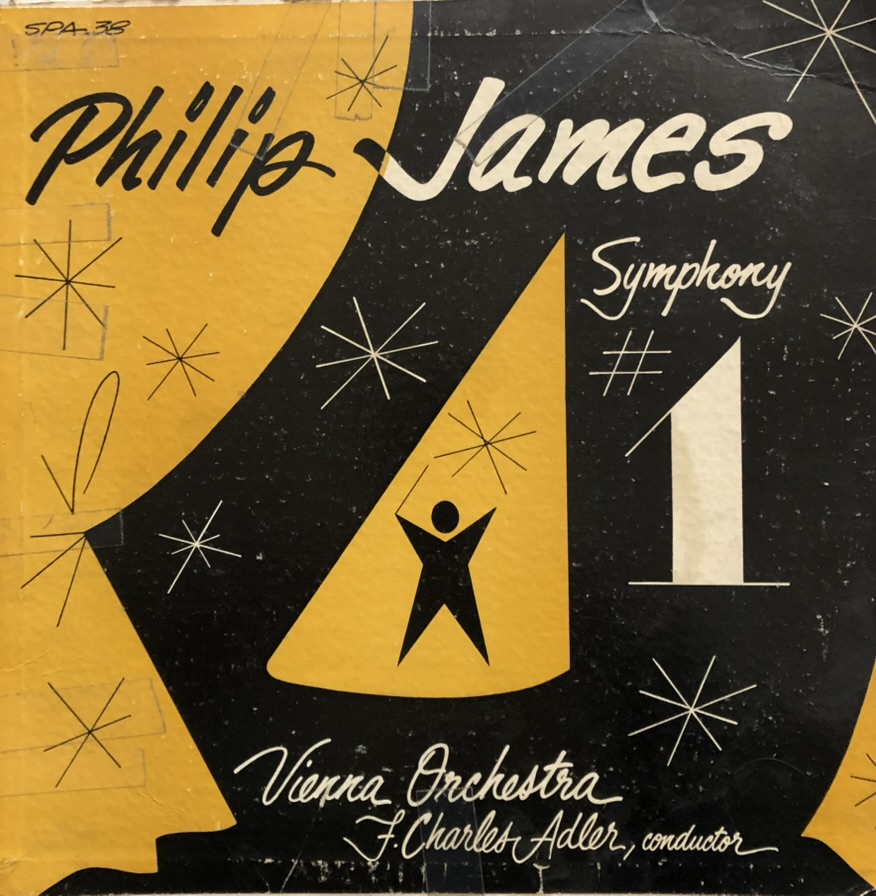
And to school I’d bring the ‘commercial’ recording of Daddy’s music. I was kind of proud of him – but alas, the record was from way back in 1950; it had sold only a few copies…

2.
OK, HIS vacations – we went on vacation while he was still walking. And I absolutely loved it! I got the sense that my sister Vivien loved it too.
Well, they weren’t really vacations: my Daddy would say, on a Saturday or Sunday, ‘Let’s go for a drive!’ Mommy would drive SLOWLY. We’d pass some fancy mansions and we’d end up in the beautiful village of Cold Spring Harbor, maybe buying candies, or a snack…
Then we started going on REAL vacations, driving to Philadelphia, DC, the Amish, and the gorgeous Blue Ridge Mountains. My Mom would be worrying about the stove being left on; my Daddy was sitting on the passenger side, peeing in a chosen Mason jar. My sister and I were in the back seat, staring in wonder at the ice melting down the mountainsides… Or we’d laugh about how blueberry pie – popular in those roadside days – was leaving a blue stain on my Mom’s teeth.

Or we’d drive up to Rochester, where the old Howard Hanson was conducting my Dad’s Symphony #2, a premier. My Dad sat there listening, listening… and I listened too. It was loud, and about horrible wars. His eyes closed and his hands moved a little; the conductor’s arms flapped all over the place…
Or we’d visit his musical friends and distant relatives in England. Or France, my Dad’s old hangout. Daddy and I went into a brasserie in Paris: I am 14 but it doesn’t matter that I drink. We are talking like REAL grown-ups, all about the old composers – and I have to keep him from falling tipsy on the way back to l’appartement.
Or we wander into a fancy Paris record store. ALL of the records are of ultra-modern composers, Boulez, Stockhausen, Cage, and the customers are young, and smoking Gitanes and Gauloises cigarettes… My father seems somewhat sad, somewhat ‘out of his league’…
3.
All right, history, HISTORY - and birth -
Daddy was born in 1890, in Jersey City, across the river from Manhattan. His father was Welsh – and Daddy loved hearing Welsh melodies all day long. His father was first a locomotive engineer and then, in later years, security guard at a chocolate factory. And his mother was German. I saw a photo of where they lived in those years – it was poor, but back in those days you simply WORKED…

Here’s where they lived, at 78 Railroad Ave…

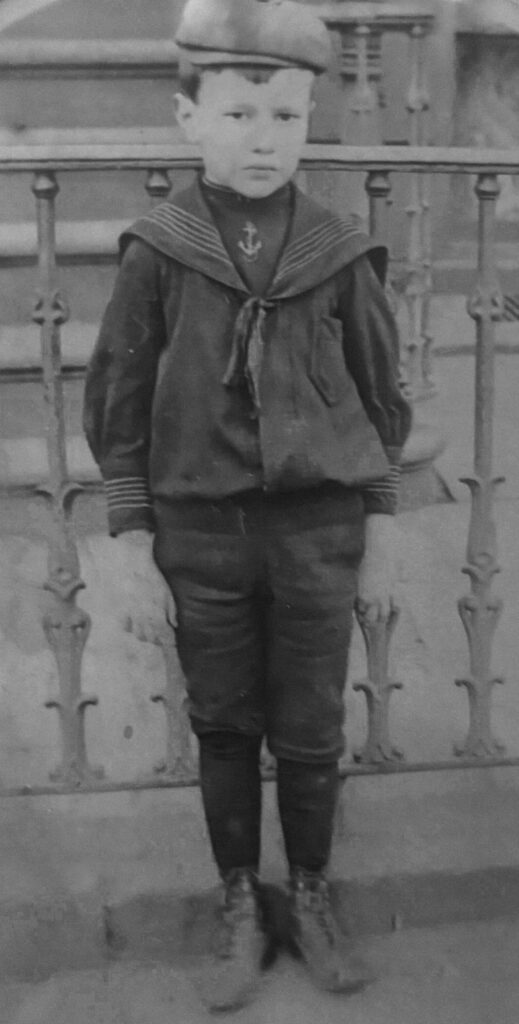
And here he was:

He loved his ‘Ma’ and ‘Pa,’ as he put it. Daddy used to tell me about a boy who lit the gas lamps along the street every night – he didn’t use a ladder, but a long metal rod with a wick inside. And he loved how QUIET it became – no sound of cars, none at all.
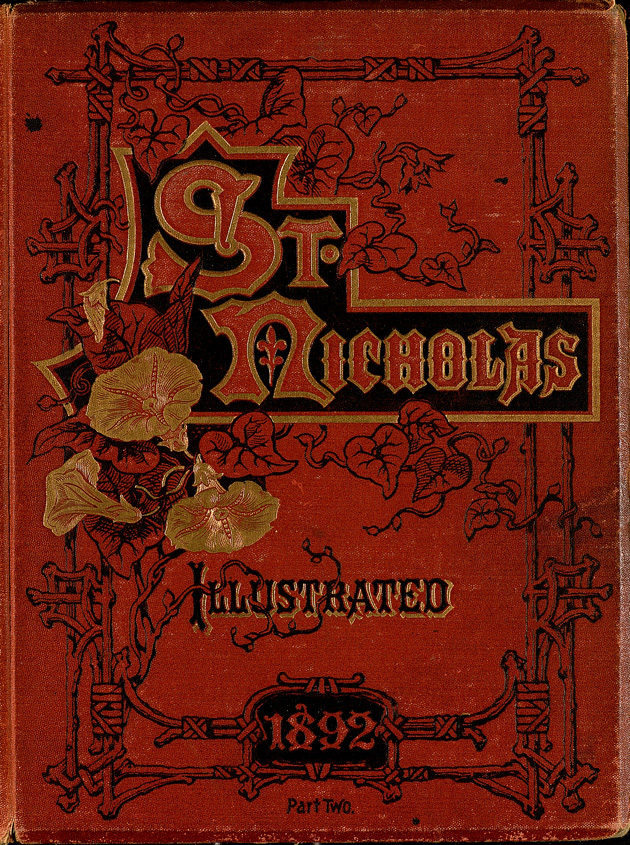
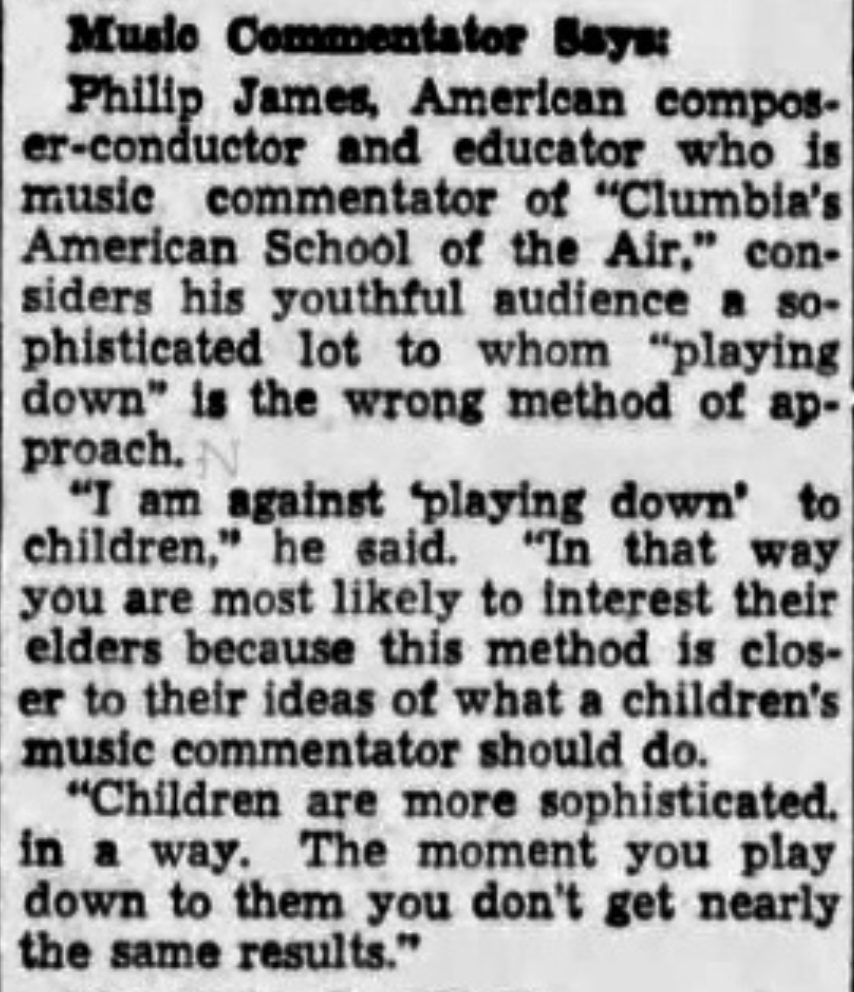
He read a very popular magazine: St. Nicholas. We still have his old copies! It was written for kids by great writers – Louisa May Alcott, Mark Twain, etc. – and it never ‘talked down’ to them. It was an ‘adult-kids’ magazine.

His sister Mildred became a sort of musical teacher to him, she taught him to play violin and piano. Daddy always called her a ‘wonderful teacher.’
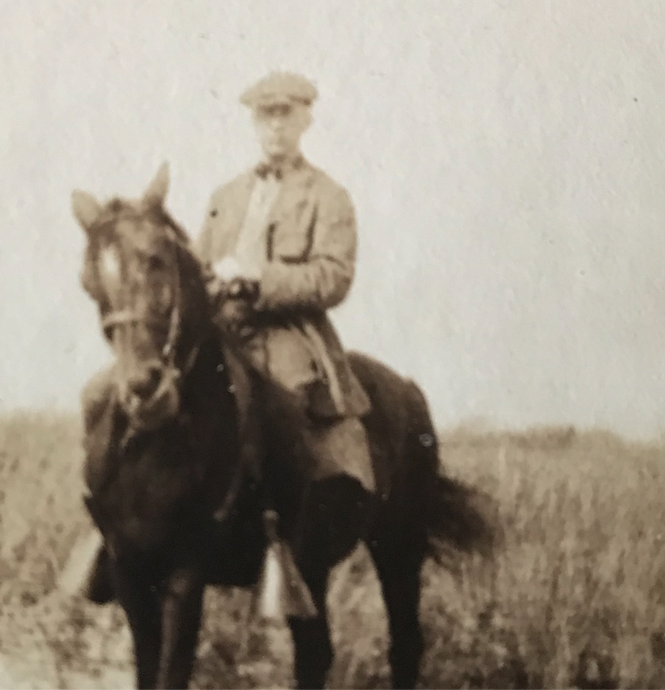
So he was 17 and he traveled by horse, by train, and by foot all around New Jersey and New York, giving performances on piano and organ – Mr. Philip Wright James. Notice how many ‘horseshoers’ there are:
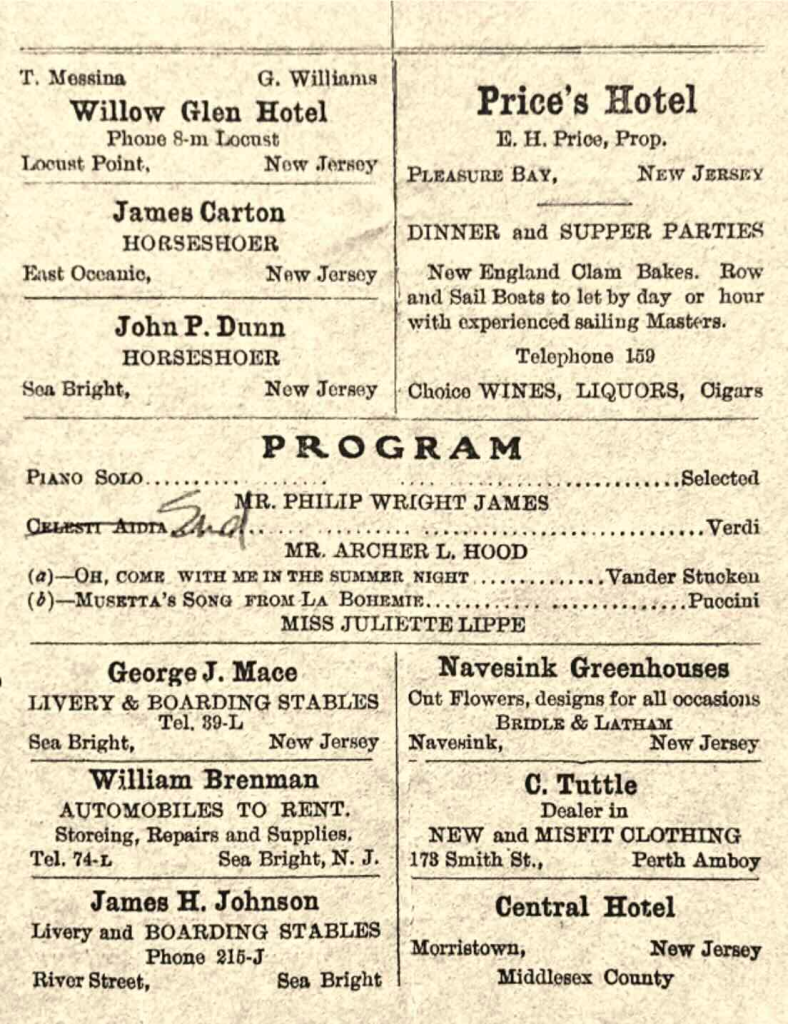
Daddy had lots of teachers, in organ, in harmony and in orchestration. He wrote a letter about his ‘Bach teacher,’ J. Warren Andrews:
The organ loft BREATHED the spirit of the atelier. Here were organists, not simply made, but moulded into artists; for Mr. Andrews was endowed with the rare gift of imparting the secrets of craftsmanship and the love of the beautiful in music. In every student he tried to see the potential artist, and all were received not so much as students but as fellow workers.
Plain spoken, modest, he preferred whenever possible to expound his theories by example. When I first met Mr. Andrews I played for him a rather over elaborate and tawdry French composition. On the completion of my performance, without any comment, he sat down and I listened to his performance of the Bach ‘Passacaglia.’ This simple incident was worth many lessons to me, and many wasted moments of discussion, argument, or explanation.
Daddy was listening to performances just about all the time. I have dozens of his programs from back then – for instance the celebrated Gustav Mahler: conducting one year, dead the next.
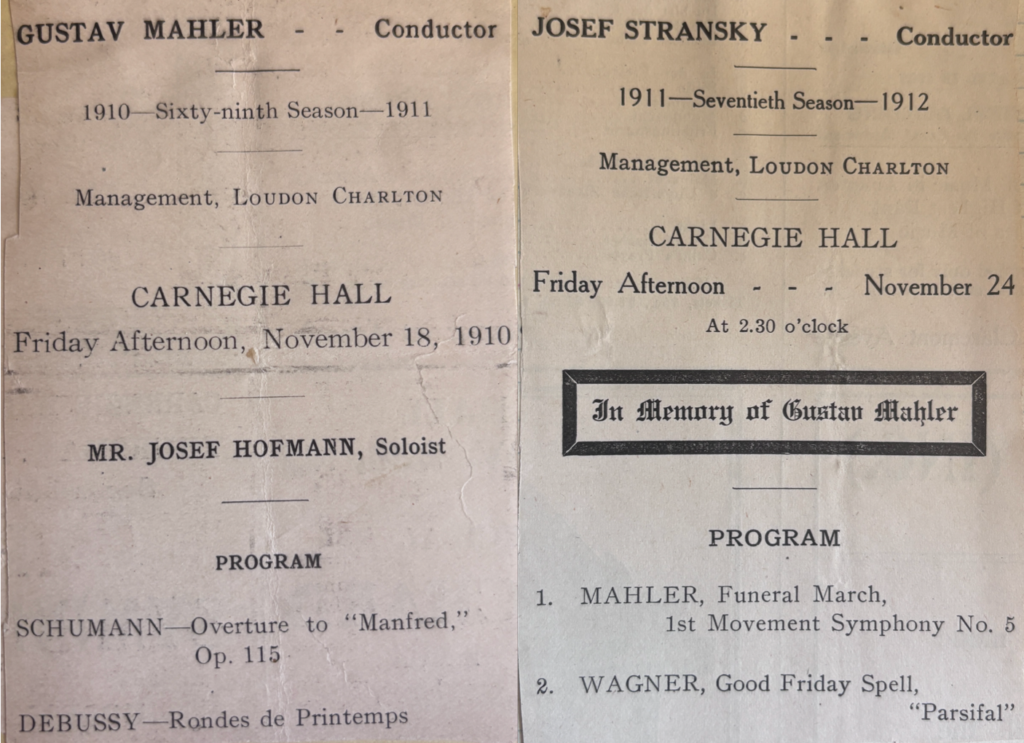
And Daddy wrote, at first, impassioned romantic anthems and songs. Some of them were Welsh-like songs, but some of them were oh-so popular, de rigueur, with these titles: Dearie, My Heart Is Like a Sweet-Toned Lute, Little Room o’ Dreams, A Million Little Diamonds, As Now the Sun’s Declining Rays… They were delectably sentimental – and early art deco:

Let’s listen to this, the song Hush, Hush, from way-back-when:
He was just about ALWAYS working on music…
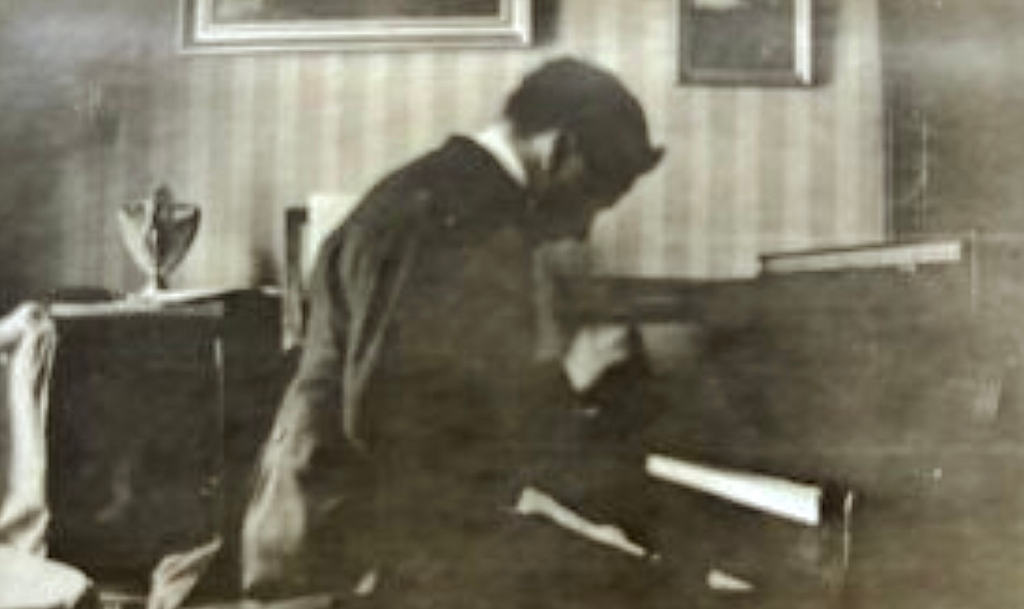
…or just plain RELAXING!
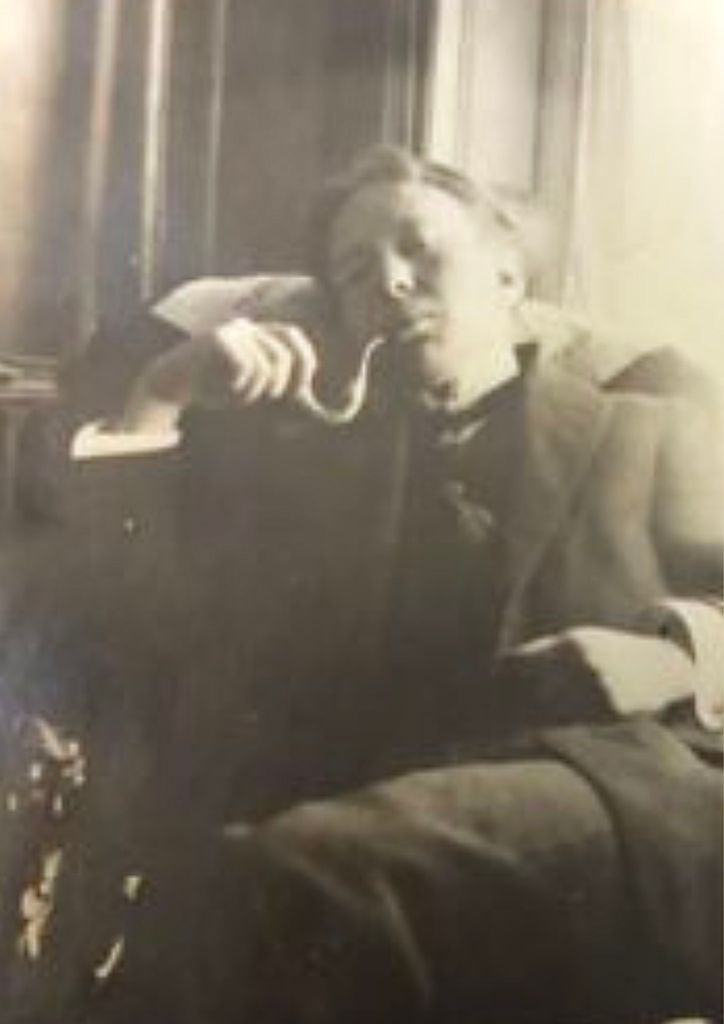
And writing: he kept a diary from 1910 on, until his death; yes, we kept them!

For instance, February 4, 1910: ‘My new frock coat and silk hat came to-day.’

Ha, ‘my new frock coat and silk hat’ – he kept them, and I played and played with them – way too big for me!

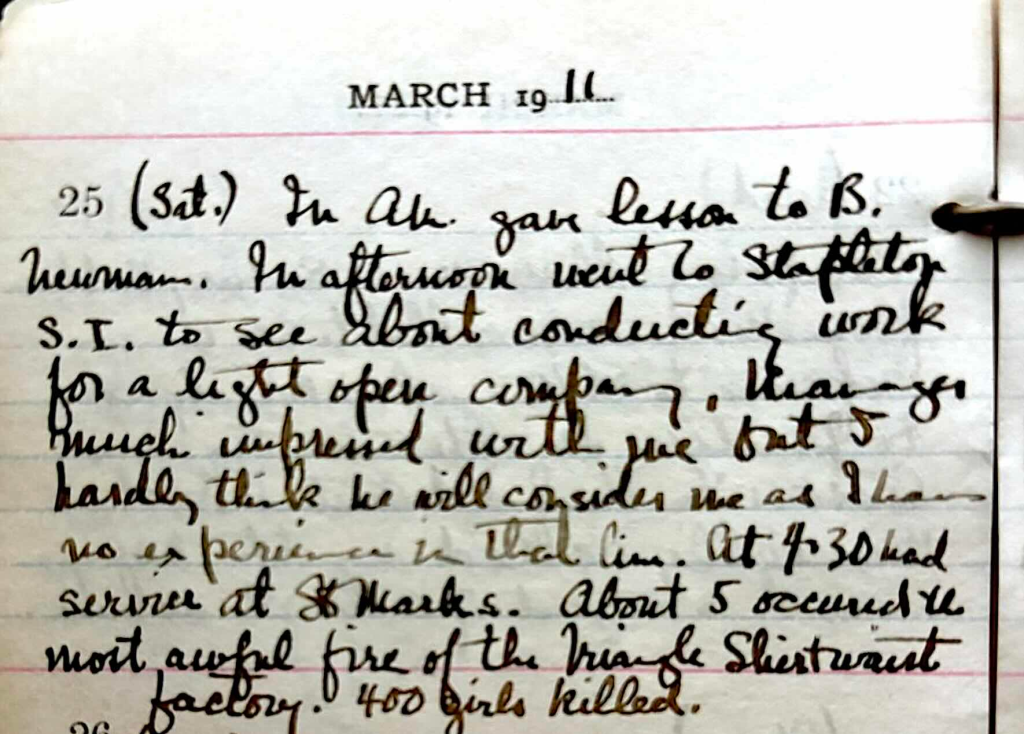
HISTORY! The diary below, for instance: a lesson; meeting with somebody about conducting ‘light operas;’ performing a service at St. Mark’s Church in the Village; and then seeing the famous Triangle Shirtwaist factory burning down a few blocks away, the ‘most awful fire’ and ‘400 girls killed:’
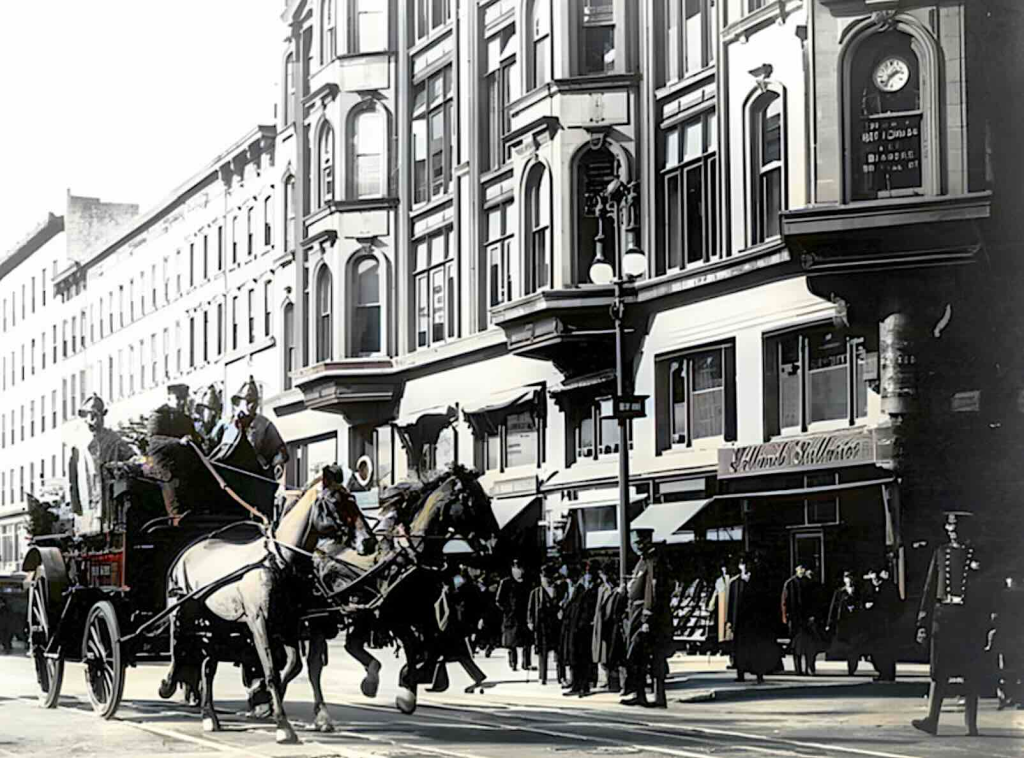
How times have changed! That’s the firetruck used to battle the Triangle Shirtwaist factory… ladders will only reach seven stories high!
______________
Matinées were VERY popular then, especially for kids – and he loved them! He conducted Snow White and Prunella, directed by Winthrop Ames in 1912 – 1913. These plays were starring the ‘inimitable Marguerite Clark.’ Later, films would appear; she’d star in them as well.
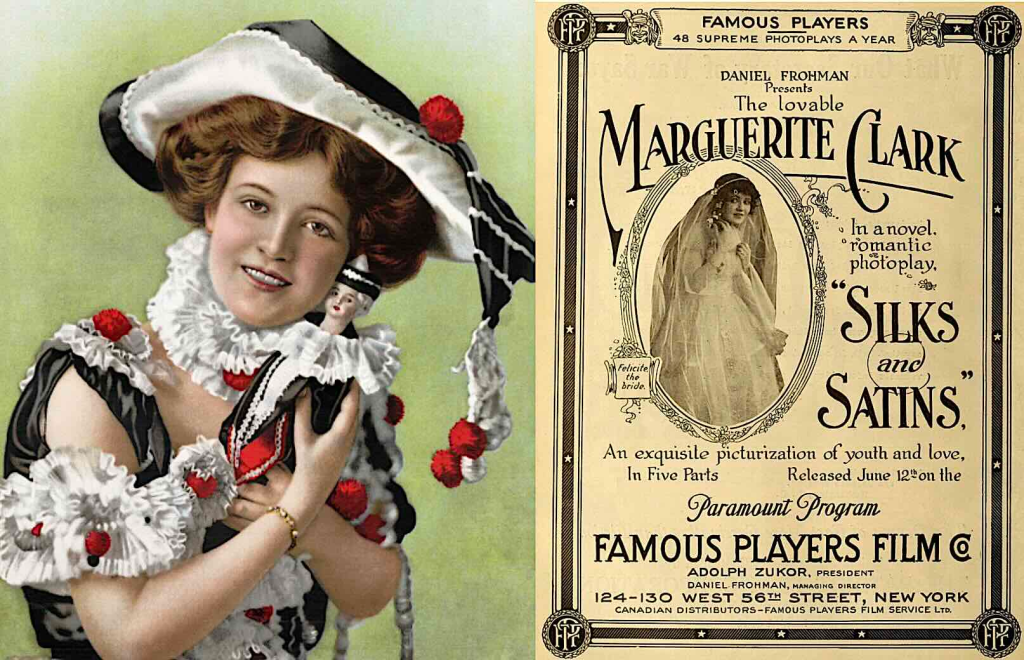
He was writing his Welsh music too, and Welsh folk songs…
And he composed his Méditation à Sainte Clotilde, 1915: a VERY romantic piece that still gets performed to this day.
He started spending his time with the opera singer ‘Miss Celli.’ His diary repeatedly says something like ‘Miss Celli called in the eve and stayed quite a while…’
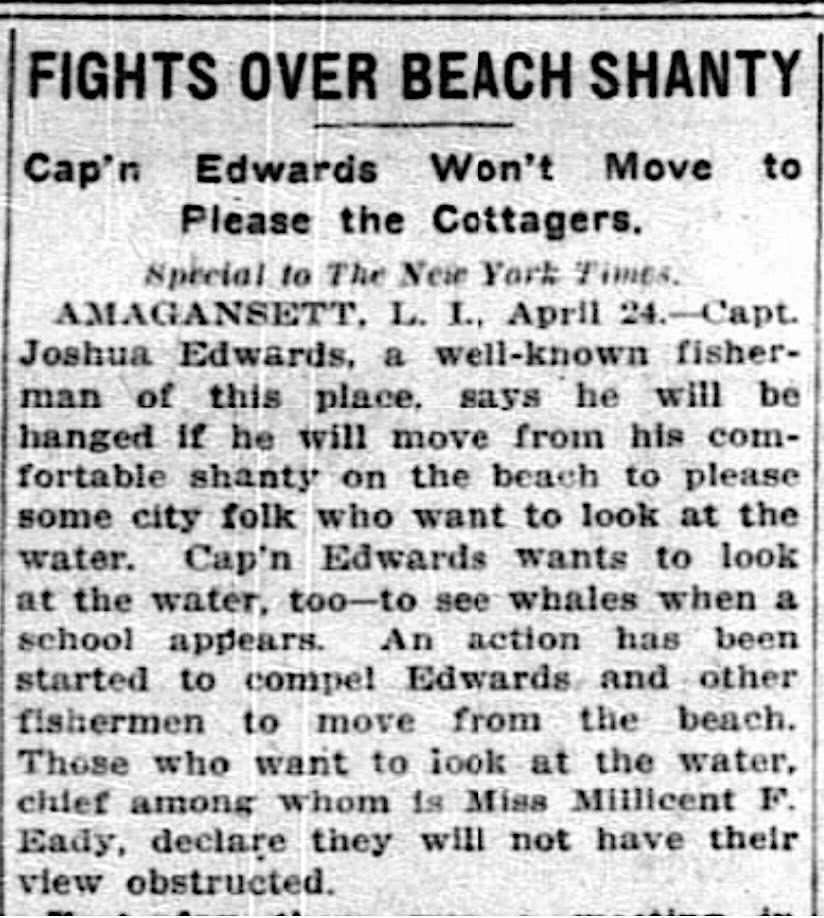
Then there was ‘Miss Eady,’ as she was known: Miss Millicent Eady.

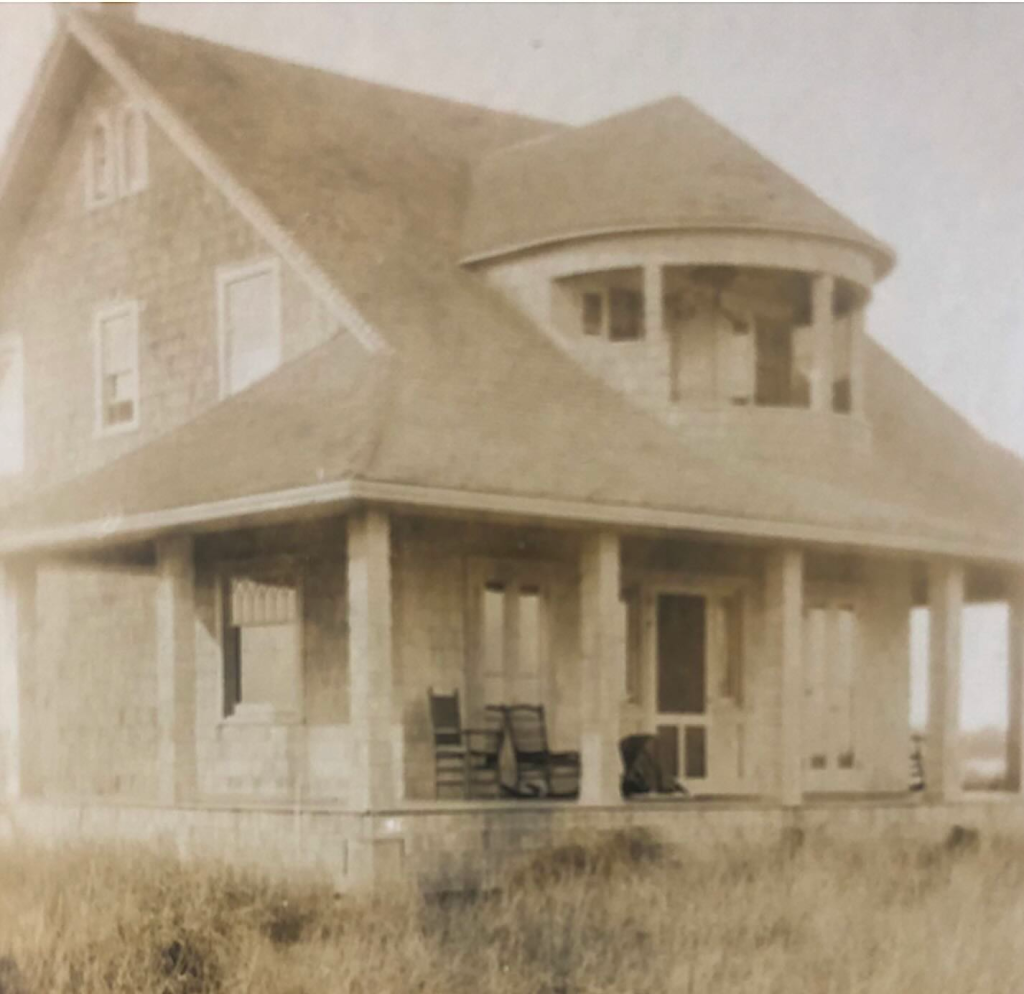
She was quite a bit older than he was. She was born in England and had a real sense of humor – Philip often called her ‘witty.’ She had a partially-built summer house in Amagansett, NY, along the ocean. Here’s a NY Times article mentioning Millicent – yes, she’s kind of bossy!

And they got married at the local ‘Dune Church.’

The two of them worked together on the house…

His horse was named for Lloyd George, the liberal British leader:

And his very FIRST tag: a Model-T.

They stayed at the summer house for years, and then she died, in 1945. And he kept the house until I was a little kid. He used to tell me how she became “bedridden,” and how he’d read her Victorian novels every evening, Trollope, Hardy, Eliot…
I remember the house, and the walks he would take: an old man walking slowly along the beach, alone, with the endless waves…
He sat me down and talked to me – with a couple of whiskeys, of course. He talked about his time in the Army, with one of his fellow soldiers, Lieutenant Albert Stoessel:

Albert was an excellent musician, and he became the very first head of the NYU music department. He hired both my father and the ‘avant-garde’ composer Marion Bauer, and by 1933 my Dad had replaced him as the head of the department. Well, Albert had composed a piano ‘pop tune’ called ‘La Media Noche’ in 1928, and he showed it to my father, who wrote the totally fun organ part of it. Ah yes, walking, strolling around a lit-up plaza at midnight, perhaps smoking a cigar… Too bad Albert died of a heart attack in 1943, while conducting; he was only 48 years old.
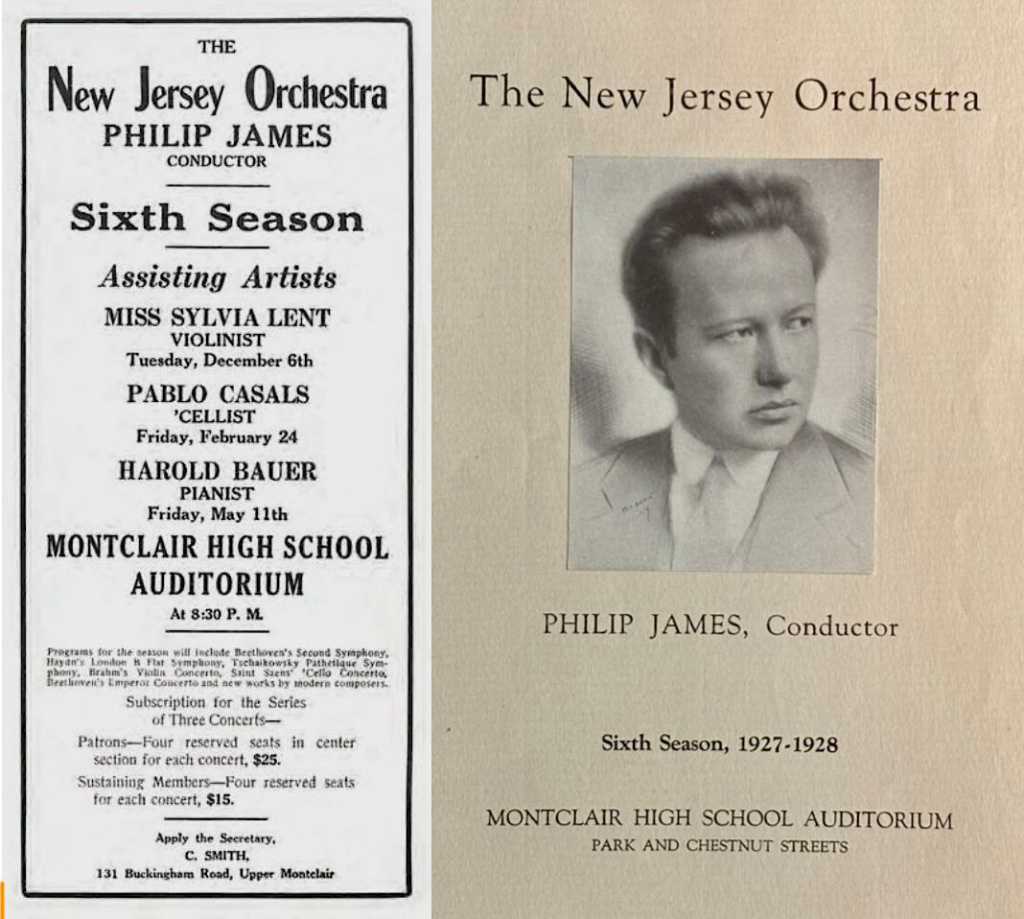
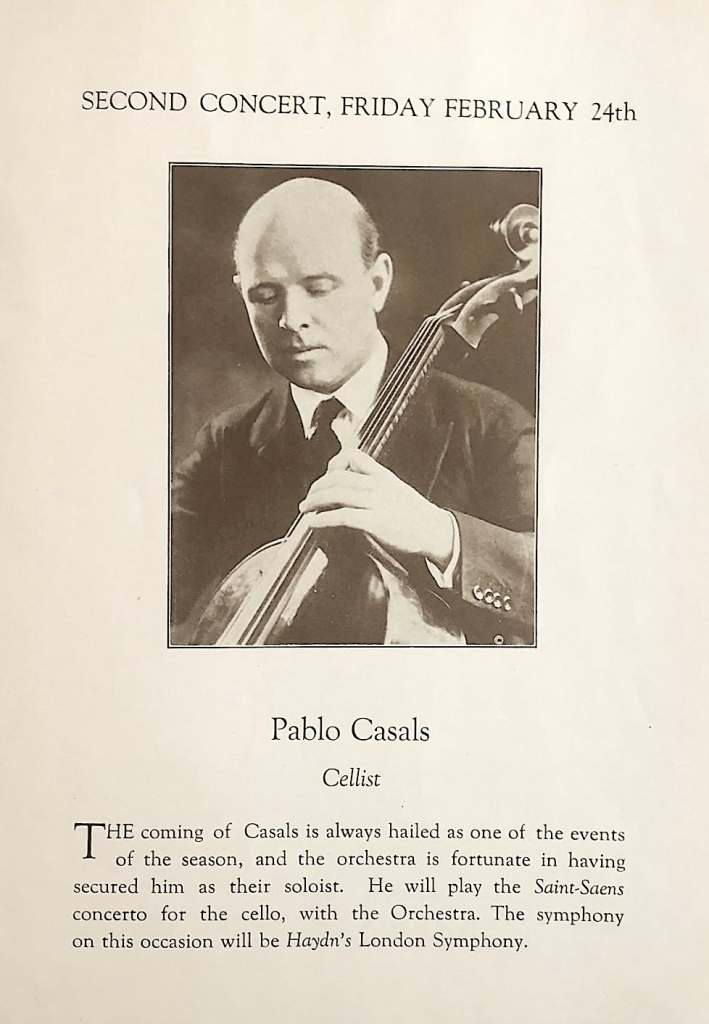
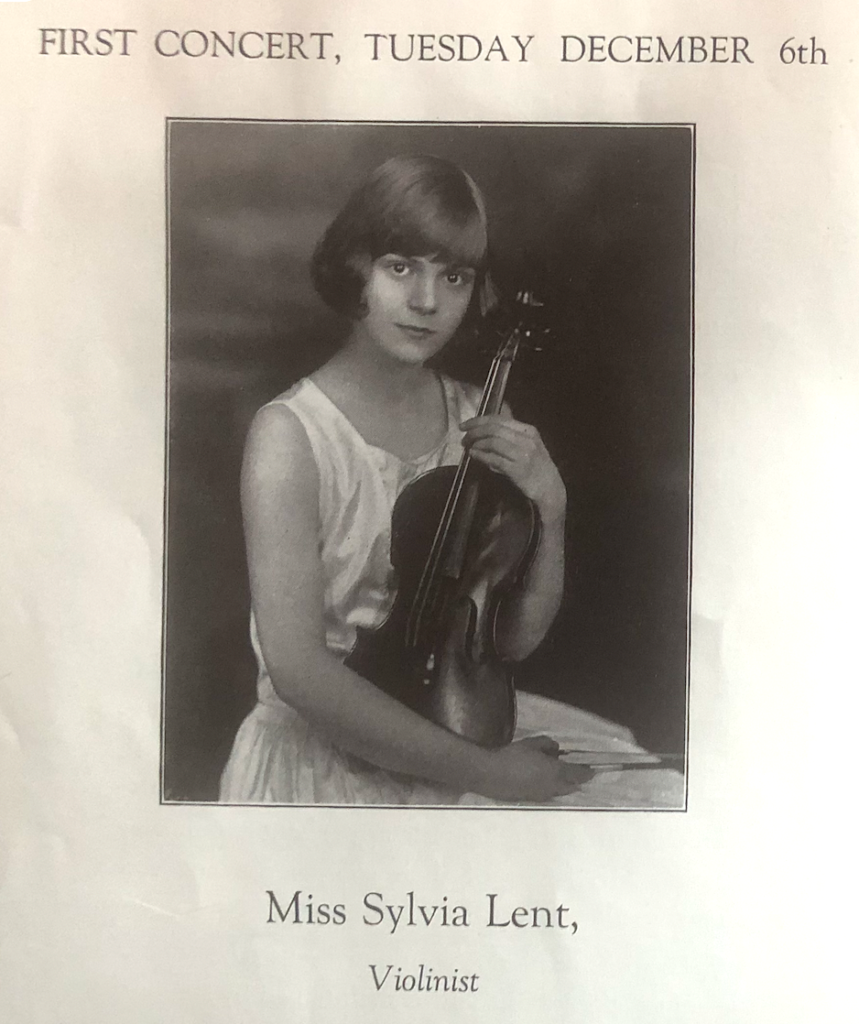
And the ‘NJSO,’ the New Jersey Symphony Orchestra. As a youngster, age 30 or so, he’d started it –

Casals was well-known in his day…

Or he talked about the ‘Broadway scene,’ for instance Victor Herbert, who heard him right out of the Army band and hired him immediately as conductor and musical director. Daddy led the songs and dances for My Golden Girl: ‘A Little Nest for Two,’ ‘Ragtime Terpsichore,’ ‘I’d Like a Honeymoon with You,’ ‘The Jazzy-Jazz Dancing Lesson,’ ‘What Shall We Do If the Moon Goes Out’… and the two of the men went out afterwords, drinking. Daddy claimed that Victor Herbert was indeed a true teacher to him. Unfortunately he died of cirrhosis in about four years.

And Daddy fell fast asleep, snoring like CRAZY...
I snuck up to my stamp collection. Yes, there he was, Victor Herbert –

I looked at what stamps I had:
America’s five ‘Most Famous Composers’ appeared in 1940 – pretty damned old-fashioned! There’s 1-cent Stephen Foster, 2-cent John Philip Sousa, 3-cent Victor Herbert, 5-cent Edward MacDowell, and 10-cent Ethelbert Nevin, who was ‘known especially for Mighty Lak’ a Rose and Water Scenes.‘

______________
OK, now Station WGZBX –

I knew he had a radio show way back when, but as I said I hadn’t REALLY heard about it until recently…
Time Magazine wrote in 1932:
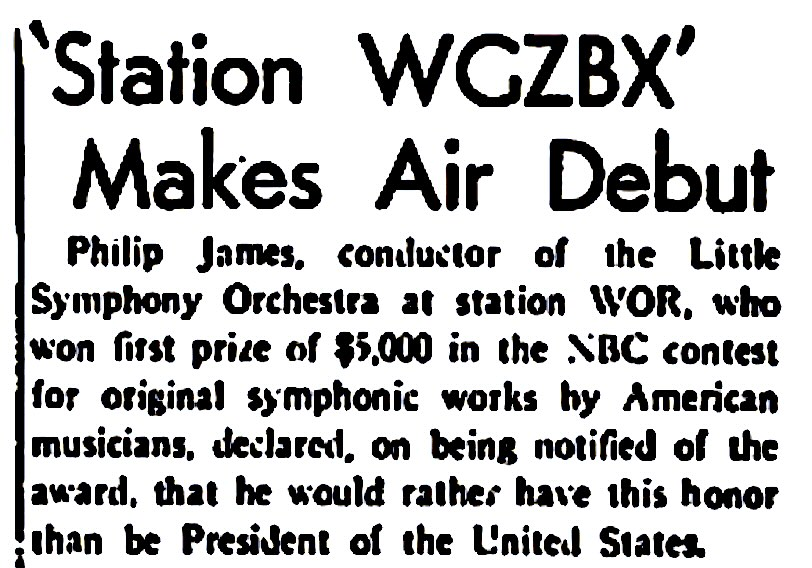
Radio gave U. S. music an added puff last week. Philip James of Manhattan won $5,000 for ‘Station WGZBX,’ a midget symphony which ingeniously describes lobby confusion at a studio, interference, ‘static,’ a slumber hour, and microphone hysteria.
And Radio Guide:

‘…he would rather have this honor that be President of the United States.’
NBC’s president Aylesworth then presented a check to James; $5000 was a LOT of money in 1932: it would be worth $118,300 in 2026.
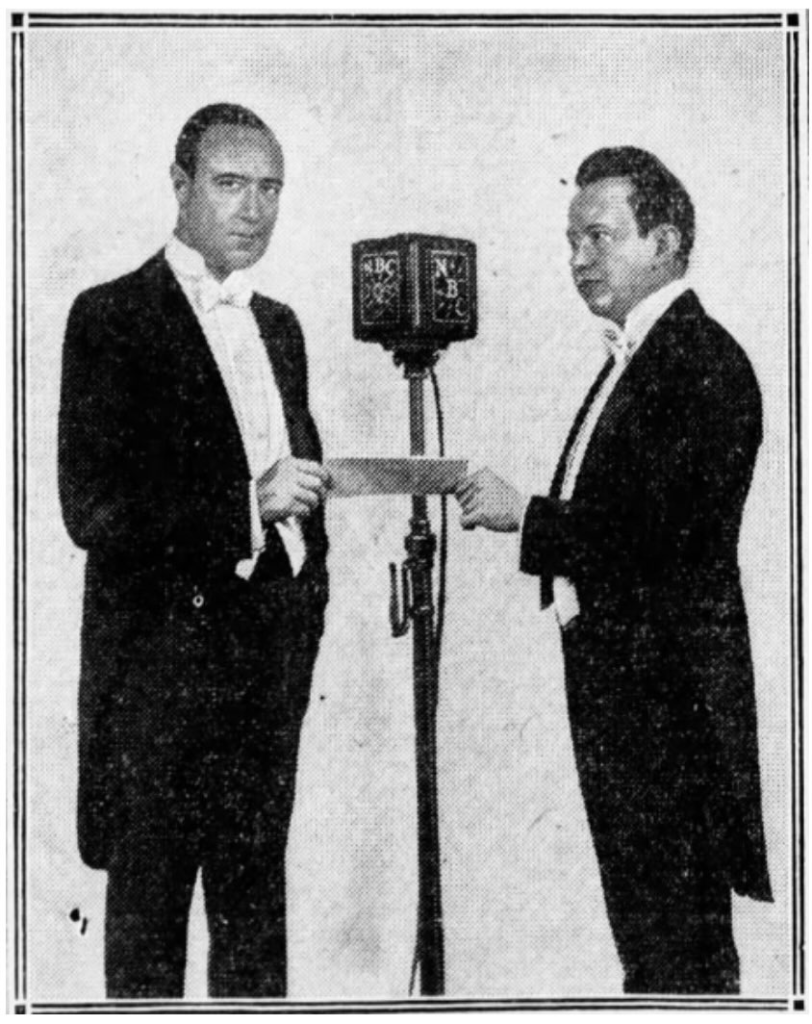
This was the first ‘radio contest.’ Here’s how it worked:
573 orchestral manuscripts were submitted anonymously by the public. The jury was composed of ‘famous musicians.’ Five works were chosen as finalists and were played, anonymously again, on an NBC broadcast. From there, 150 selected listeners sent in their choice by telegraph, and the single winning composition was played on the radio May 8th, 1932.
Leopold Stokowski (juror) sent Dad a letter:
I enjoyed conducting your work and hope you will let me conduct another some day. I especially enjoyed the great beauty and depth of feeling of the third movement and the plastic quality of all four movements. It is a pleasure to find an American composer who has freed himself from the academic dogmas of form and has the power to create his own forms.
And check out what Daddy has to say about instrumentation – it’s pretty funny! Orchestras used to be BIG:

Here’s a small portion of his Station WGZBX:
Ah radio!
Daddy conducted the Bamberger Symphony once a week for seven years, Thursday from eight to nine. Every week he had ‘special guests.’ And he also had the ‘American School of the Air.’ Shades of Leonard Bernstein, only there wasn’t television:

Thomas A. DeLong’s excellent book (Radio Stars) had this to say:
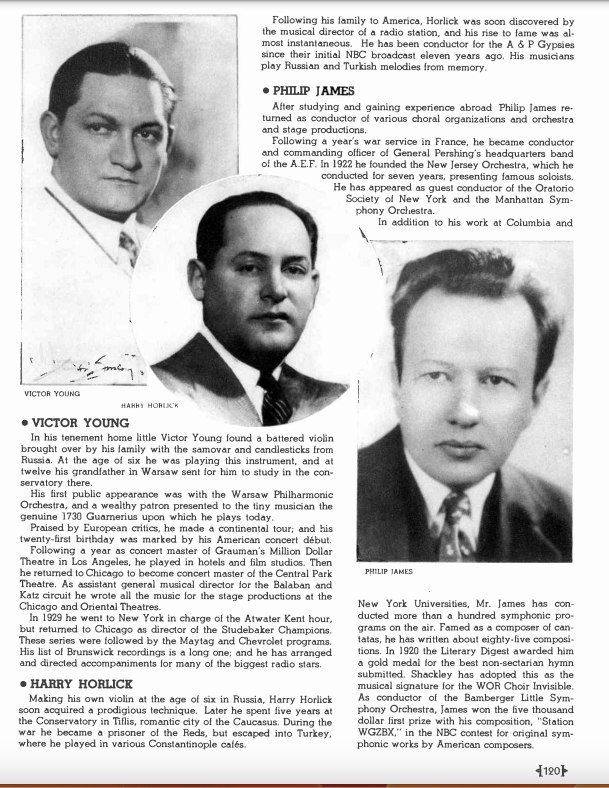
James considered radio work the finest school, technically, for the embryonic American conductor and orchestral musician. ‘We must look to our radio stations, unorganized and inconsistent as they are in many cases, for an American school of conductors,’ he said in 1936. He became conductor of WOR’s orchestra in 1929 – the first chamber ensemble to broadcast weekly. He made it a point to present one American composer each week.
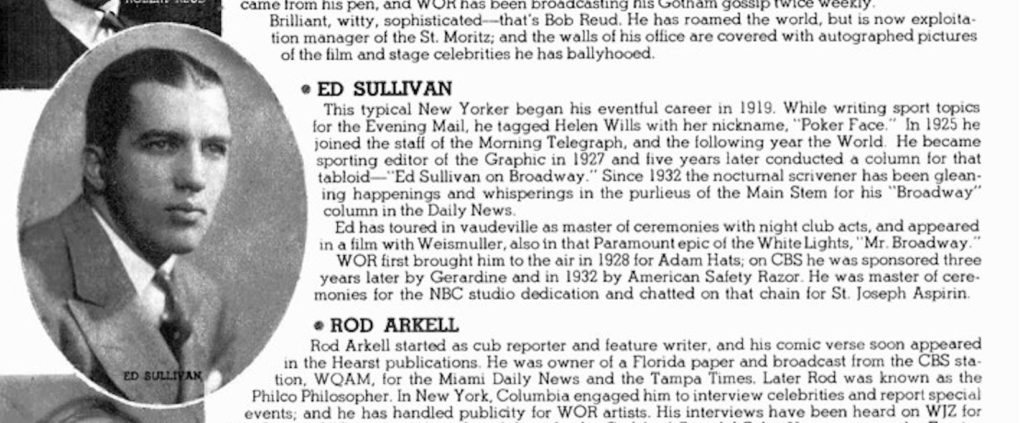
Well, commercial television was almost here – Ed Sullivan advertised himself… along with Philip James:

But Daddy didn’t think much of TV. Oh, he watched the soap opera General Hospital for a couple of years, and Perry Mason, and yes, Ed Sullivan and Leonard Bernstein, and the news… but then he stopped watching it altogether…
_____________
Now Wales:
I remember Daddy waking us up on St. David’s Day. It was a day FULL of smiles, and the Welsh symbol of daffodils and leeks. And of course we had the bright red Welsh dragon hanging in our hallway:

Well, I LOVED visiting Wales! Our family went to the village of Cwmafan; we had seen a photograph of Dad’s grandfather and his tiny row-house, in the 1840s:

And Daddy’s father was born there, in 1850.
Daddy wrote beautiful Welsh modal melodies: Gwilym Gwent, The Stranger, Galarnad, Song of the Miners, Cwmafon… And he composed Gwalia, the archaic name for Wales, a medley of great old folksongs likeThe Bells of Abertawe, David of the White Rock, Megan’s Fair Daughter… The melodies are oh-so-Welsh, of men marching toward the deep dark coal mines.
In the fifties Scranton Pennsylvania was loaded with Welsh people, including my Dad:

And this: I was named Philip Dylan James, after the Welsh poet Dylan Thomas. He had just died a month before I was born. My father loved his poetry and kept obituaries of him, stored within his Collected Poems:

Yay! I too enjoyed Thomas as a kid, and I loved Wales. Ah YES!!
______________
AH, how I miss him!

[to be cont’d…]
^^^^^^^^^^^^^^^^^^^^^^^^^^^^^^^^^^^^^^^^^^^

Helga (‘Mommy’) was working toward a Master’s degree in musicology at New York University; my father was her ‘professor of music.’
Her family was German and Jewish. They had lived in beautiful Berlin, with just one child. Her father was an obstetrician and a bit of an amateur moviemaker. Ah, the playful times, and young Helga! This shows what life was LIKE for her in Germany, until the Second World War:
Well, the airplane seems a bit ominous… and the United States Holocaust Memorial Museum had this to say:
Helga’s paternal grandmother Julie Bujakowski was deported by the Nazis to Theresienstadt on June 17, 1942; she perished at the age of 83. Hans’ brother Fritz, with his wife Else, and young son Walter were deported to Auschwitz where they perished in 1943. Another brother, Kurt, who had worked as an editorial assistant fled to Vienna in 1936 to escape the Nazis. He, his wife Dina and daughter Stephanie (“Steffi,” b. 1937) then immigrated to France after the Anschluss; from there they were deported to their deaths in Auschwitz on September 9, 1942.
[Helga] attended German public schools until Jewish students were expelled. She left Germany in August 1938, with her parents [Hans and Augusta], then sailed to the United States and arrived that September.
So Fritz and Else and Walter and Kurt and Dina and Steffi and Julie were ‘perished,’ i.e. killed, probably by gas. So many deaths, so many deaths:
Grandmother Julie, Uncle Kurt, Aunt Dina, and Helga…


…proud parents!
‘Steffi’ …


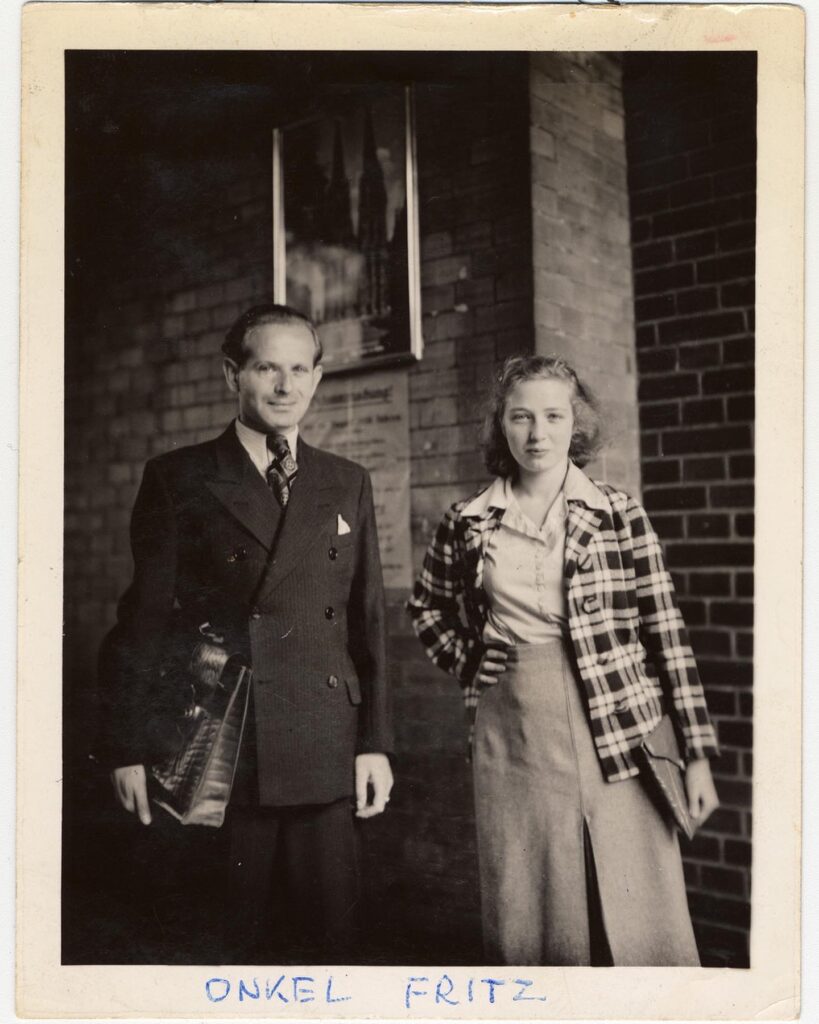
…and Helga’s ‘Onkel Fritz’ in Berlin, 1937 – all dead…
Helga and her parents moved to Freeport, a suburb of New York. Her father changed his name from Hans Adolph Bujakowsky to Henry A. Boyer – he copied the actor’s name, Charles Boyer. And she became Helga Boyer, too.

Helga was married to a fellow NYU student, Bill Shank, from 1948 until 1951. Like Bill, she did NOT believe in killing, even Nazis. Bill wrote:
I really had made up my mind that I was not going to go into the Army, that I had a philosophical objection to war, that I felt that war was immoral, that I thought it was futile, that I thought it was evil, and that I just didn’t want to have anything to do with it.
Bill had been to the ‘conscientious objector’ camp in Waldport, Oregon. Steve McQuiddy wrote a wonderful book called Here on the Edge, the Story of Waldport:
…Pacifists and political objectors to World War II spent their daylight hours planting trees, crushing rock, building roads, and fighting forest fires—fifty hours a week, for no pay. At night, they published books, produced plays, and made art and music… They called themselves the Fine Arts Group at Waldport, and their focus was not so much on the current war, but on what kind of society might be possible when the shooting finally stopped.
Bill finally left Walport and ended up at NYU. And that’s when it ALL started, with Helga. They were both taking music classes, were both music majors at New York University. And they got married. I haven’t the slightest idea where they lived; it was DEFINITELY poor. She always spoke of restaurant jobs, laughing and getting fired, and cold-water apartments, tiny places in Greenwich Village.
Helga got her Master’s and she took another orchestration class. She says Philip smiled at what she had composed ‘Russian-style.’ She laughed too, and he wrote at the top of the page ‘An Afternoon in Minsk.’
Well, she stayed married to Bill for a while… it was NOT easy!
And Daddy composed and composed, writing his most brooding works…
So she divorced Bill, and married Philip.


There are many speculations about how it happened, but nobody really knows. I don’t think it was for money – that wasn’t what she was like, that wasn’t her.
I think it’s because she was falling in love, in genuine real love. Yes, he has been, like her, through ALL the wars, through ALL the suffering…
…and I would say they were deeply, DEEPLY in love.
When I was a kid we vacationed, by train, to Daytona Beach. That was where Philip and Helga had to ‘hide out,’ in 1950, for some of the three months required by divorce law. He chose ‘The Tower:’

And here is the ‘risqué’ part of a letter Philip sent her. He almost always called her ‘Helgie,’ or ‘Helshin’ or ‘Helgala’:

Alas, Helga had to stay in Daytona by herself for days, renting a motel room. And there were rats: they would chew and chew Philip’s love letters.

She sent Philip her pictures, taken by her neighbor. Always the same dress, standing the same way:

______________
There was something broken in Helgs, a sad missingness, a loneliness… I saw it in her eyes!
She was ultra-shy, especially around people at cocktail parties. And nervous. And she was scared of heights, scared of uniforms… and she would very occasionally break down, get worried, and fall on the bed crying.
She despised Nazis, thought they were ‘stupid,’ but strangely she was NOT afraid of them. One day my father decided we’d eat at Lüchow’s, a German-style tourist restaurant. We’d only been there a few minutes before my mother started arguing with the waiter. He was a tall old German man, and he yelled at her ‘I am NOT a Nazi!’
‘Yes you ARE!’ she shouted back, and loudly. Well, she knew he was a Nazi. They never quite died away, those Nazis. They ALWAYS crept in, crying ‘Heil’ to their leader…
Then there is disease, she was ALWAYS getting some slight disease. She usually showed ‘palpitations,’ whatever they were. And I guess I got sick a lot too: mumps, measles, ‘the croup’… But I actually liked it, being sick. My Mom brought me new toys and lots of books, and she smiled at me WONDERFULLY.
Ah, the way she’d loudly sing on three notes, singing that dinner was ready: Vash hands and sit down! [Pause…] Vash hands and sit down!
She ordered a ‘Barber Kit,’ frequently sold in those days – but Helga was NOT an artiste. I was embarrassed as hell, looking like a weirdly irregular mop. I even was called into the principal’s office, where he asked me how I’d gotten the haircut. I said it was at a barber shop in another faraway, faraway town…
I remember Helga loving animals, absolutely LOVING them – dogs in particular. I remember her smiling humanly with ‘Seppel,’ the miniature dachshund in our funny family. Once a minister came over, I don’t know exactly why, but Seppel LEAPT at him and furiously humped his arm, to which we all (including the minister) cracked up.

Seppel!
Helga and Philip smiled together, too. And they played old four-hand piano pieces composed by Dvořák. I remember one time Helga felt VERY nervous about it, and Philip seemed somewhat annoyed…
But he gave her sentimental perfumes, jewelry, someone’s autobiography, whatever…
And she gave him vests, with pockets to hold his gold chain and pocket watch. One of the vests she gave him was BRIGHT red; he loved it!!
______________
Going back a few years… Aargh! I was CONFUSED as hell: school, mother, hospitals…
I was 5 years old and drew this picture, and in 1980 or so I haughtily labeled it ‘untitled, 1959.’

It was definitely a she. And she either had humongous ears or angelic wings. I like to think of them as ears, hearing the subtlest of tunes…
And she definitely has an unhappy look on her face, and ten fingers: are they grabbing at something?
Yes, my Mom – Mommy – that’s who I have problems with! As I said before, there was something broken in her, at least at first…

I feel curious AND confused. I would come back to that mixed-up feeling over and over, even as an adult…
______________
The four of us lived first in a small but cushy apartment; our windows overlooked the Macy’s Parade. I couldn’t quite figure out what that last balloon was, an astronaut OR a deep-sea diver:
Yes, it was Thanksgiving. We had guests over: Nancy and Ray and teen-aged Veronica, they were distant relatives of Dad. Ray and Dad talked and laughed, and Nancy – she was British – rode our hobbyhorse while singing ‘Ride a Cockhorse to Banbury Cross.’ I loved it! Then we sat and ate, and we were poured a few drops of wine down the hollow stems of our glasses. And it tasted great. I should have known that I would become a drunk!
Then they showed home movies, with their faint SMELL, and Ray would show slides… slides, slides, SLIDES, laugh, laugh, laugh, click, click, click…
Helga had the shyest of looks on her face, and she was pretty damn quiet while Philip Sr. and Ray blabbed and blabbed. I think she felt she would become a ‘whole person,’ if she could just take a couple of deep BREATHS…
That’s what Helga was like back then. She could be absolutely wonderful, and laughing almost hysterically, but then she’d be quiet, or even angry… or she’d get ‘palpitations.’
I felt like I had to IMITATE her, without ever understanding the behavior! One afternoon we were going to take the tourist ferryboat around Manhattan, and she suddenly threw a fit, refusing to go. And I threw a fit too. WHY?
______________
Now it’s Christmas. We’ve moved out to the burbs because of my Dad’s poor health. Our house has a bar inside; it’s pretty damn tacky. And unfortunately, and secretly, I snuck tiny little sips from the bottles…
Christmas 1963, waiting for guests; notice the TV hidden behind the slats…


…or Christmas 1967, me and Mom, and Leopold Stokowski, an autographed friend from the 30’s...
Ah Brylcreem: ‘a little dab’ll do ya!’
Helga was a non-practicing Jew; Christmas didn’t mean a whole lot to her. But for Daddy: AH!!!! He LOVED Christmas! He had to make SURE that the kids got adequate presents: dolls, stamps, a weather station, even LPs of Dylan Thomas reading his poetry.
But Helga?
She’d go lie down after a while. Perhaps she had ‘signs of depression’… and headaches… and I, too, began to feel everything that way, just like her. I’m afraid I was always over-sensitive. I was changing from a child into a cigarette-smoking cynic.
And I’d go to my room and write, write write WRITE!
Aargh! I mean, what do you want? It WAS the sixties!
______________
After Dad died, Helga became a ‘real person.’ She published the complex catalog of Daddy’s musical works, trying to get performances of his pieces; and she hooked up with an old guy, Albert Shapiro, who met her at a ‘dating club.’ He died a few years later at her apartment: the doctors have removed one of his legs…
…etc. ETC!
Oh she was eccentric, for sure… but she was coming ALIVE! She lived till she was ninety-four years old, couldn’t hear or walk any more, but she sure could laugh about things. I’ll write about it some day; yes yes YES!
^^^^^^^^^^^^^^^^^^^^^^^^^^^^^^^^^^^^^^^^^^^

Exactly one hundred years ago my Dad composed what was called a ‘funeral hymn.’ He named it Cwmafan, after the Welsh village where my grandfather had lived.
He was working on it again a few years before his death – I remember that! I couldn’t figure out why it meant so much to him. But I listened, and somehow it grew… Great Spirit: no ‘God’ or ‘He’ – I like that –
The lone, wild fowl in lofty flight
Is still with Thee, nor leaves Thy sight.
And I am Thine! I rest in Thee!
Great Spirit, come and rest in me.
The ends of earth are in Thy hand,
The sea’s dark deep and no man’s land.
And I am Thine! I rest in Thee!
Great Spirit, come and rest in me.
It was played at a funeral celebration for the noted musician/musicologist Royce Boyer in Huntsville, Alabama, on November 18 of 2025. They called it a funeral, but it really was a celebration.
Somehow it was the magic KEY: Great Spirit, come and rest in me.
His ‘church music’ suddenly SPOKE to me!
______________
I heard tons of music, ALL kinds. I mean my father was the ‘Head of the Music Department’ at New York University, and they knew his stuff well.
He’d written romantic songs in the teens, instrumental and orchestal ‘show pieces’ in the twenties, ‘funny’ pieces in the thirties, and stories about deep love and war in the forties. In the fifties he did less composing, he had become ‘Daddy.’ And in the sixties on he principally created ‘church music.’ I used to scoff: oh Daddy!
But I recently wanted to learn what it was all about, this church stuff…

Well, she would know: that’s my grandmother – born around 1850, died in the thirties. Quite a hat she’s wearing! Toward the end of her life, Christmas 1931, she went to St. Mary the Virgin in NY and there she listened to Philip’s A Canticle for Christmas – he loved Christmas! It was over 20 minutes long, for chorus and full orchestra… and it was dedicated to her, to ‘My Mother.‘ (I wish I had known her – she looked so kindly!)
So I hunted and found the score for one of Daddy’s mid-twenties works,The Lord is my Shepherd – I wanted to see what it was like then. Ah! It is really beautiful:

Most of his church work is fluid: a particular piece may start one way and end very differently. I like that! And usually it has particular feelings – I like that too. Too bad I couldn’t appreciate it back when I was a youngster!
There are a few pieces of Philip’s orchestral AND Sunday morning stuff on Youtube, ‘typical Sunday mornings’ in a ‘typical Sunday church’ setting. By the Waters of Babylon is a lovely old piece, written when he was just getting out of World War 1, a hundred and seven years ago:
______________
So it was 1975. I had left town, and Philip and Helga moved away to a house by the Shinnecock Bay, out on Long Island. He was dying then. He had a St. Christopher medallion around his neck. He asked me in a way I could barely understand: ‘Am I going to die?’
I replied embarrassed, ashamed: I don’t know, I don’t know…
And we had a church funeral – it was really a concert, with lots of Daddy’s melodies, and lots of his ‘church music.’ At the end the organist played a piece called Sortie, French for ‘goodbye’ – it was dedicated to his well-loved minister, and it was the very last work he’d written. As I say, it started one way, and ended another…
…and I sure do miss him!

^^^^^^^^^^^^^^^^^^^^^^^^^^^^^^^^^^^^^^^^^^^
The musician/musicologist Royce Boyer wrote, in 1996, about Philip James’ war diary, and what life was LIKE in those days (American Music, Vol. 14, No. 2). So here is yet MORE history – I mainly talk about the end of the war…
______________
OK, the ‘war machine,’ the twentieth-century male stuff, the airplanes, submarines, bombs, and poisonous cars on all the roads, the whole WORLD getting noisier and noisier…
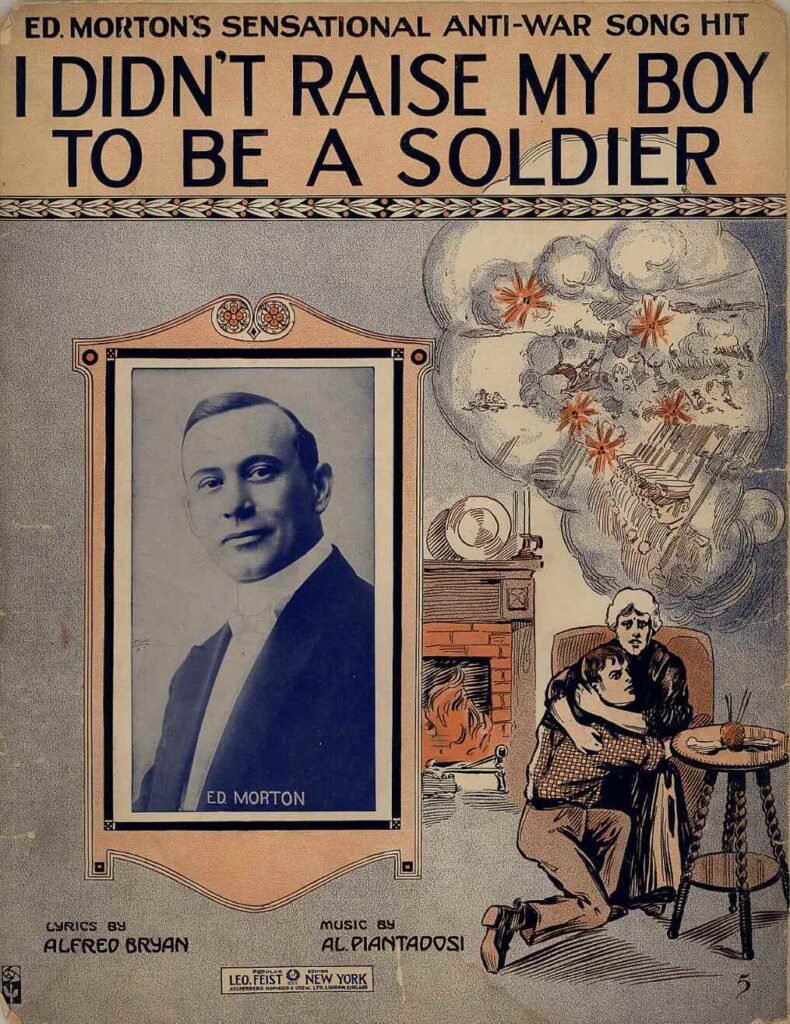
Daddy married his first wife, Millicent, in 1915. And an anti-war song hit that year; it’s VERY popular:

I didn’t raise my boy to be a soldier,
I brought him up to be my pride and joy.
Who dares to place a musket on his shoulder,
To shoot some other mother’s darling boy?
Uh-oh: Theodore Roosevelt proclaimed that
…the foolish people who applaud a song entitled ‘I Didn’t Raise My Boy to Be a Soldier’ are just the people who would also in their hearts applaud a song entitled ‘I Didn’t Raise My Girl to Be a Mother’.
Good ol’ Teddy!
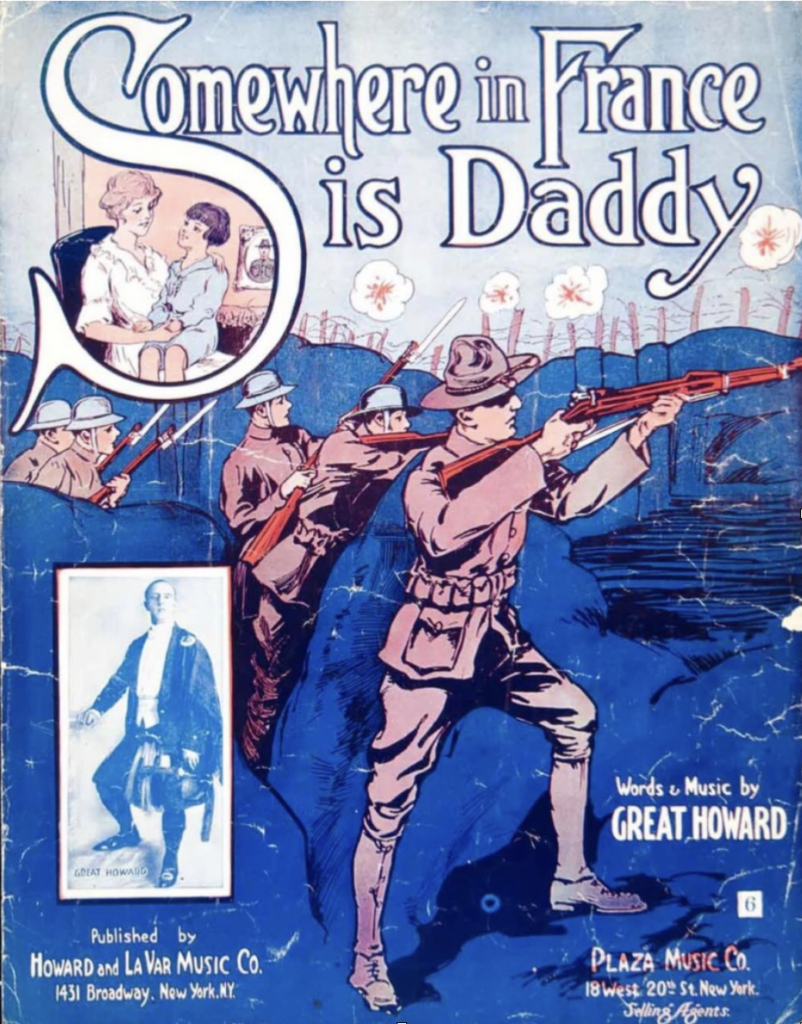
And parodies of the song came out as well: ‘I Did Not Raise My Boy to Be a Coward’, ‘I Didn’t Raise My Boy to Be a Soldier, but I’ll Send My Girl to Be a Nurse’, ‘I Didn’t Raise My Dog to Be a Sausage’… and on and ON!
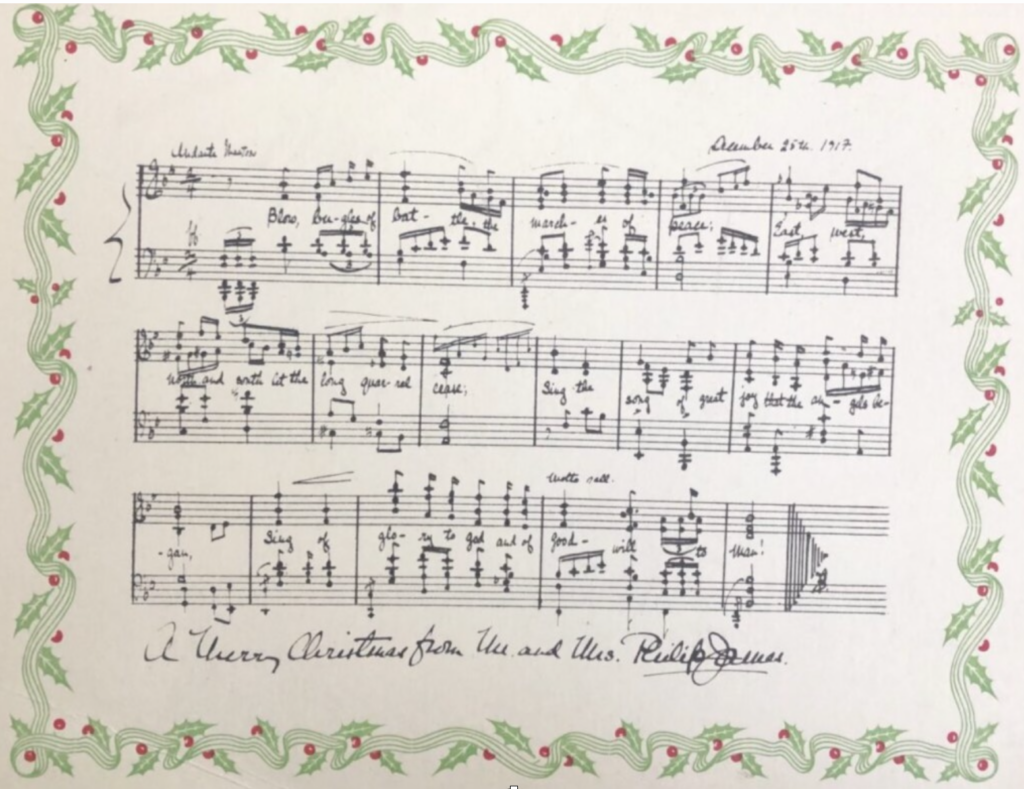
So my father was drafted in October of 1917; he had no choice, not really. He mailed his OWN Christmas cards to friends: Blow, bugles of battle, the marches of peace; east, west, north and south, let the long quarrel cease:

He wrote in his diary – and just about everyone had a diary:
‘Sounds unpatriotic but I don’t think I could kill any man no matter how sinful his country.’

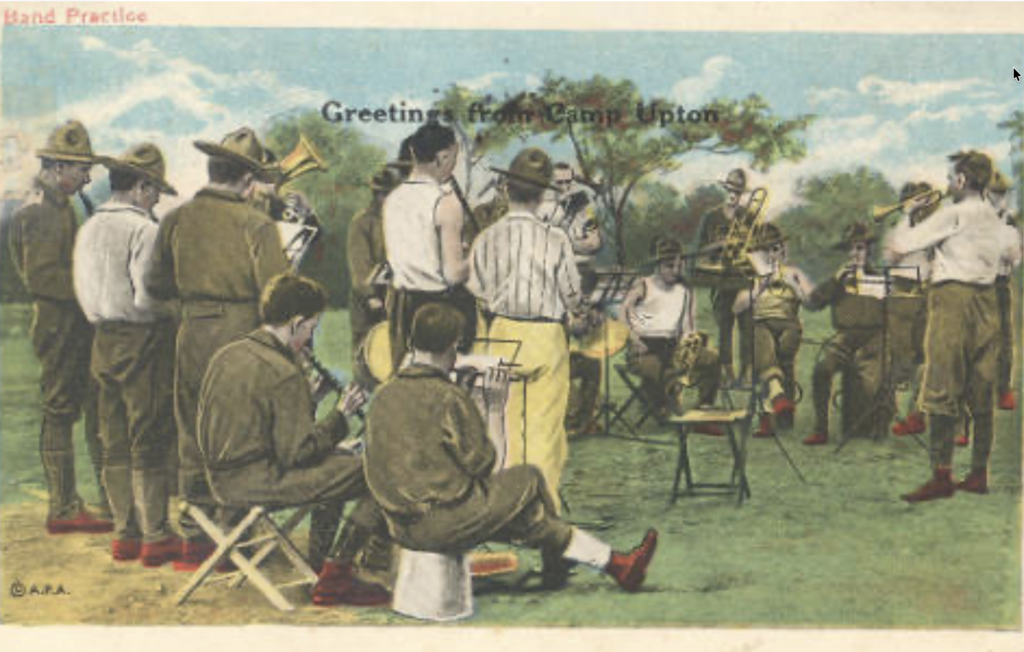
musicians – PJ is second from the right
He learns to play the tenor saxophone, at Camp Upton on Long Island. He calls his sax ‘Baby.’

And he writes:


April 10, 1918: To-day marks the closing of my first six months in the Army. Quite rough, cold and penetrating. We were nearly frozen. About 50% of the boat are sea sick. I have felt very well although at time a grinding spell comes over me due to the awful conditions of our sleeping quarters. Men packed like sardines on the deck… some of them vomiting all about..
Yes, he writes and WRITES:
The dishes and table linen are filthy. Where we sleep is below the steerage (the old baggage hold). Water, dampness, smells, foul air and rats ever-present. At night about 12 a drunken soldier, dirty as an ocean can be, slept next to me and nearly vomited in my face. Coughing, spitting on my pillow until I threw him over on his side…
At 6:30 we played Retreat and gave a little concert: a despondent fellow committed suicide by jumping over board… The sky met the water and the horizon was a harmony of green and pink, the sea is beautiful, not rough and choppy but broad and sweeping like Beethoven’s Eroica or the mighty Fifth...
I was put on deck until nine… In the foam of the sweeping ocean the phosphorus was wonderful. I felt as if I was drifting in a fairy boat, the most lovely clouds and twirling stars…
He’s in France now:
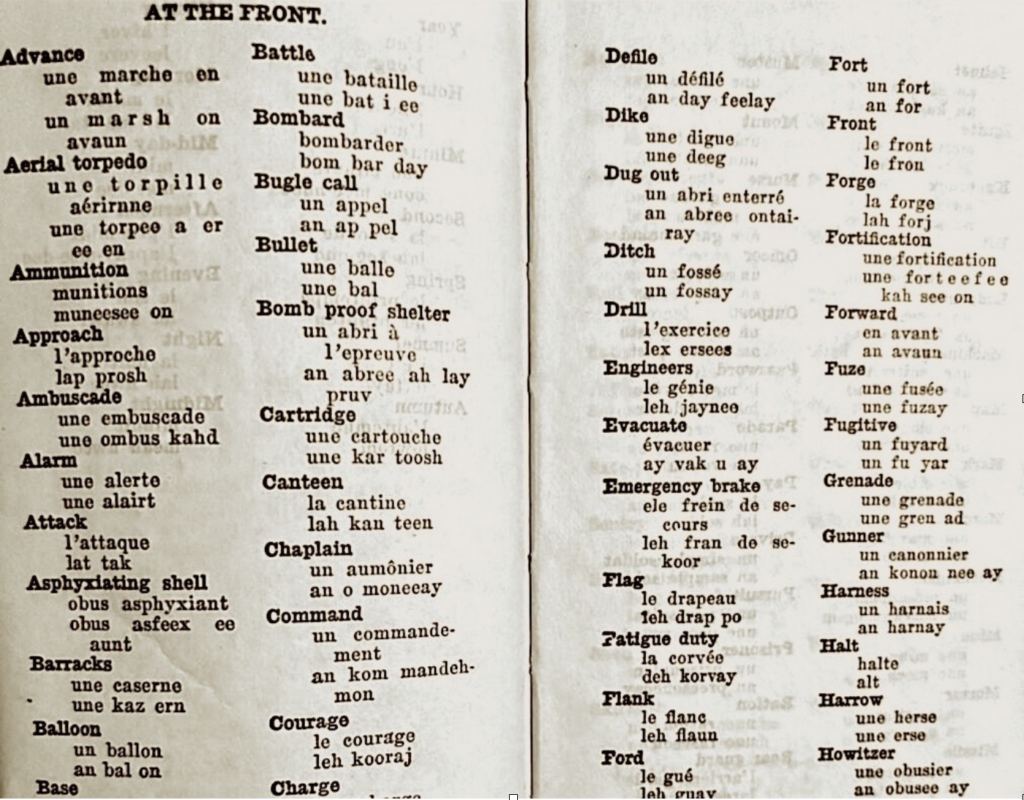
‘Asphixiating shell…’

And he adds right away:
It is interesting to note how we get the facility of telling the difference between shells, bombs and planes by the sounds. It may be a musician’s ear…
I notice the youngsters here all sing our popular songs in English such as ‘They Go Wild, Simply Wild Over Me,’ ‘Over There,’ ‘Darktown Strutter’s Ball,’ etc., but they sing them so quickly and with such rhythm that it makes them sound like old folksongs of France. These children are certainly born with rhythm…
We had been ordered to bury the dead which are still remaining here, and there are hundreds of bodies which have been left for weeks without burial. Sanitation squads have been overworked as well as all the chaplains… About 8:00 in the morning we started in digging graves, making and marking crosses and then burying the men who were principally Germans. I hope I shall forget the horrible sights. Nearly all were in bits from machine gun fire and we had to collect them in blankets, some rotted, some almost skeletons, find their identification tags with long nippers of pliers and finally bury them with prayers etc. The stench was horrible to say the least.

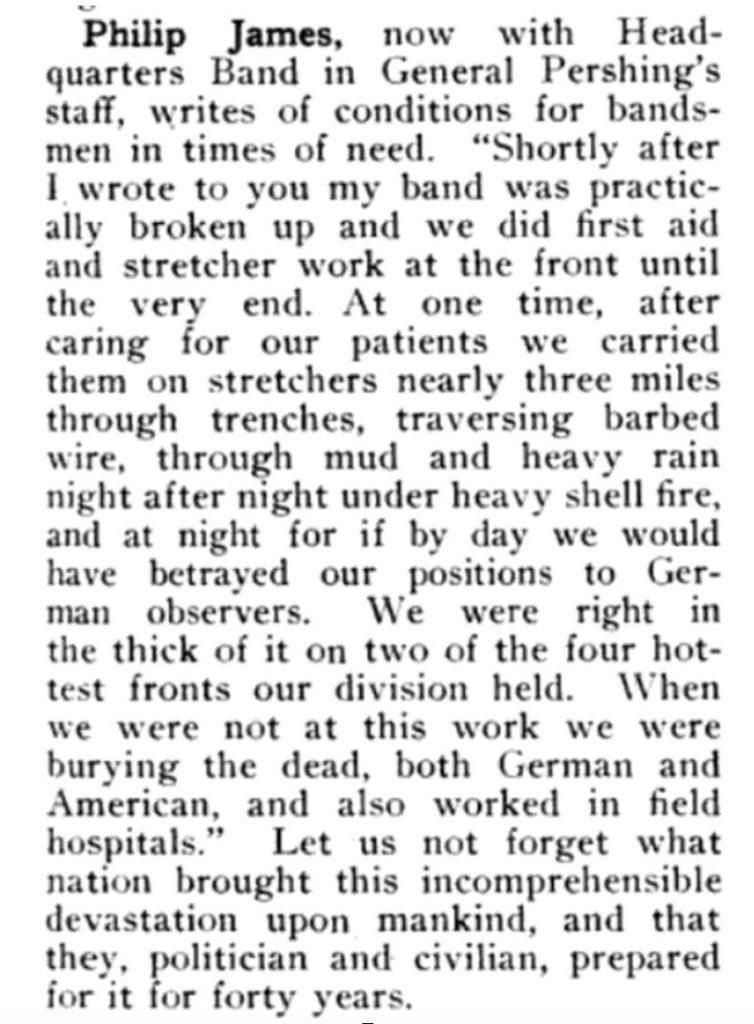
James wrote an article about what exactly ‘stretcher-bearing’ was, entitled Heroes Who Know It Not – all about those who were in charge of cleaning up the bodies (The American Organist, November 1919):
‘Every stretcher-bearer and ambulance driver at the front in this war should have been decorated with a war cross. I have seen them at the front in rags and covered with dripping crimson; worn for the want of sleep, rest, and food, waiting to go with the infantry ever faithful…
‘A stretcher-bearer is master of himself after he is ordered to the front. This is why they are not recognized more, for only a wounded man can tell what has been done for him by these workers, and one in great pain can hardly be expected to remember the identity of those who succored them; so few stretcher-bearers are recommended for citations, crosses, or honor metals. But the memories, thanks and blessings of thousands and thousands of wounded and dying men, and the keen satisfaction of having helped to save a life, are a greater value to the stretcher-bearers.‘
Finally it was over. Glenn Watkins wrote in Proof Through the Night: Music and the Great War –
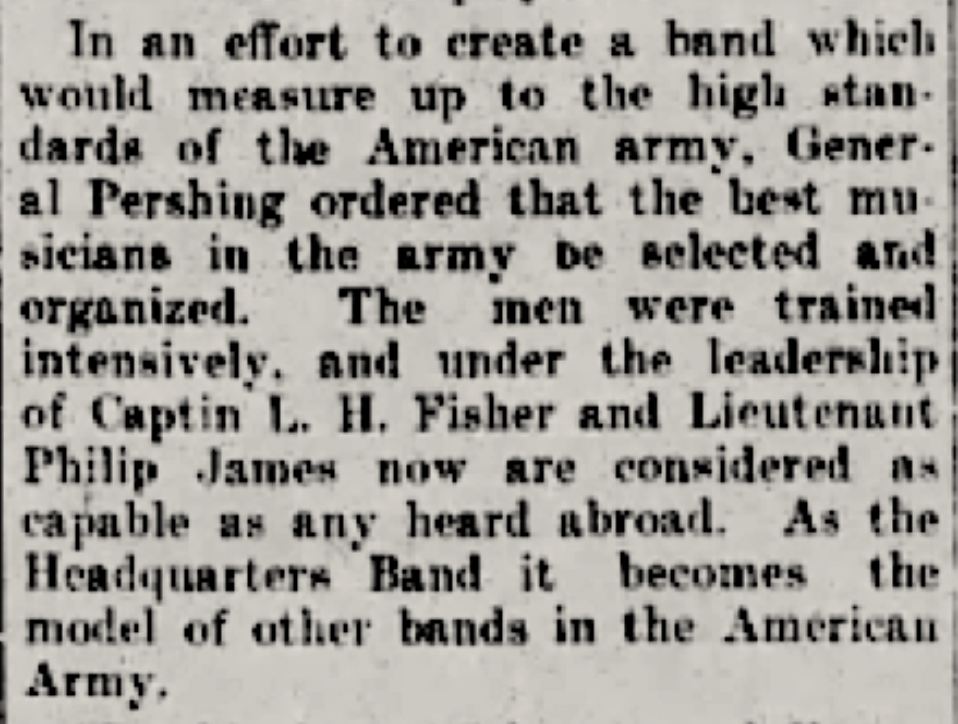
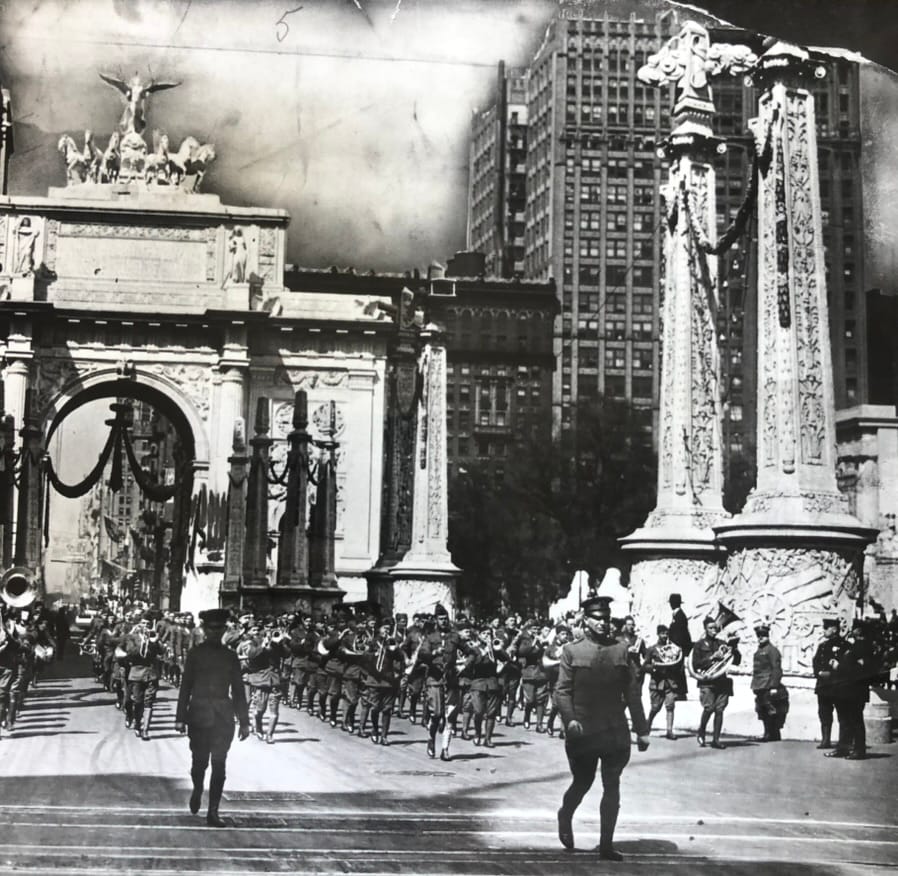
In April 1919 Philip James returned to the United States as conductor and commanding officer of the Allied Expeditionary Headquarters Band, now known as ‘General Pershing’s Band.’ He led the band on a nineteen-city Victory Loan tour… James’s concerts were wildly received as emblematic of America’s contribution to final victory in the Great War.
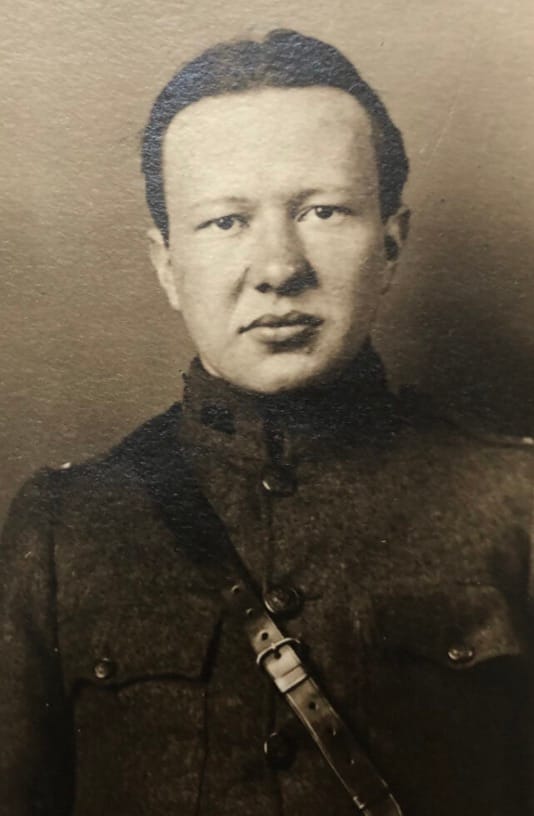
Ah, he looks so SAD, wearing his leather ‘Sam Browne’ belt: I used to play with it!


He led, among other pieces, his own ‘Colonel Averill March.’ Here’s part of a 1986 ‘composer’s tribute:’
And the government is just getting into ‘radio’ and things like that:

At age 80 or so he often poured himself a drink, then sat slowly down and asked me to ‘come over here and talk to me.’ Well, I spoke a little, told him all about school – I was probably in third or fourth grade. But then he talked about composers and especially ‘World War One.’ He talked about Pershing a lot. I think he liked him, in spite of ‘the War.’ He talked and talked… and talked… and I listened. And it was pretty damn interesting. I mean, with a couple of drinks he could smile, and gab, and talk ALL about soldiers, and composers…
Here is just SOME of his diary, when the War was gradually over. The AEF is the infantry, the American Expeditionary Force; the YMCA, or ‘Yhuts,’ provided a place for much of the music. It’s FASCINATING!

his wartime conducting…
Tuesday January 14 – 1919 – A big day for Chaumont, for at 10:00 o’clock Marshal Pétain decorated the AEF officers with the decoration of Commander of the Legion of Honor… General Pershing was also present and battalions of French and American soldiers passed in review at the finale to the accompaniment of a poor French band, but after the ceremony our own band gave a fine concert of an hour in length…
Friday January 17th – 1919 – …While at the grocery shop in the evening such a pretty little girl of four sang for us, Madeline, Marseilles, and other ‘chansons populaires.’ She had everybody in convulsions and was as full of confidence as the most professional opera star.
Friday Jan. 31 – 1919 – …Near one YMCA Hut we played at night to an audience consisting principally of officers. There is a large prisoners’ camp of Germans and they assisted us in building and fixing scenery etc. They were all very happy and cordial to the Americans. It was funny to watch a German truck filled with Germans and Americans.
Tuesday February 11 – Busy day. At night I had a dance job for enlisted men at the YMCA, the riotous kind! Good sized orchestra. Piano was too high so I had to transpose everything. Worn out when I got back to barracks…
Wednesday February 13 – Prince of Wales was to have been here today for some decoration but General Pershing’s aide-de-camp (Col. Boyd) died suddenly in Paris and all ceremonies have been called off.
February 16th 1919 – The Prince of Wales here this morning for guard and he seemed to be very much impressed, especially by one drum major, and he seemed to like the other band as well. Orchestra played this afternoon and night for him, at Pershing’s Chateau. Boys told me later he shook hands with them all… he is fond of ragtime and jazz and is a regular fellow.
Monday Feb. 17 – 1919 – Rehearsal in afternoon for this evening’s show after which I had to arrange a song for the evening, ‘Dimples.’ In the evening was the big time, for at 9:00 PM there was a special performance for the Prince of Wales and General Pershing. Generals galore! The Prince sang, whistled, smoked black cigars and enjoyed the show immensely as well as General P. The Prince said it was the best army show he has ever seen. He has certainly captivated the heart of the AEF and I meant to say he is the most democratic army officer I have ever come in contact with.


the Prince of Wales – later, King Edward VIII
Tuesday Mar. 11 – Up at 6 to get ready, clean up etc. by the big inspection of the entire post by General Pershing, which took place at 8:00 AM…
Played in the band on my much polished sax and was in three different moving pictures… At night I played in the YMCA auditorium for enlisted men’s dance over which there was a fuss as the YMCA woman in charge stopped the French girls from dancing with them. Ross, the Drum Major, gave YMCA a piece of his mind.
Thurs. Mar. 20 – …Pershing’s Chateau, a beautiful place in such a fine estate. We played for an afternoon reception to the King and Queen of Belgium, at which time many were decorated… then played for the King’s dinner.
Heard lots of rumors about this band leaving for concerts in the States…
Fri. Mar. 21 – 1919 – King and Queen of Belgium present at Guard Mount this AM. I am arranging some new music for the special show which rehearsed in the afternoon for this evening, a special performance for the King and Queen at night.

[My Dad kept the rose until he died; needless to say, it was a somewhat wrinkled mess…]
Saturday Apr. 5th – Going home! Just as Gen. Pershing was making his wonderful address the crowd around us was madly cheering with the band as they came in the gate. When they saw me they gave one wild cheer and rushing from the ranks and circled me with handshakes and congratulations.
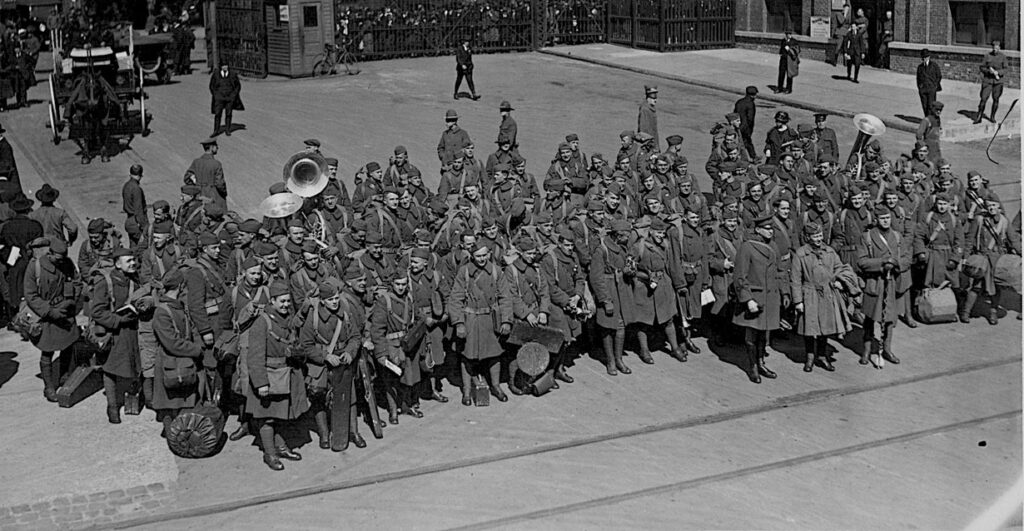
Saturday April 19 – 1919 – The good old Van Steuben arrived in New York Harbor in the morning and we disembarked about noon. After many photographs and moving pictures the entire band of 125 men was taken to the Hotel Pennsylvania so as to be near our special train…

PJ conducting for publicity, on the roof of the Pennsylvania Hotel
The cars of our train are all Pullmans and given to us by the New York Central… I have the drawing room ‘Orlando’...

April 22 – 1919 – Pittsburgh, PA. In the morning we had a parade and after a concert in the afternoon we had a swim in the big town Natatorium. In Pittsburgh the Chamber of Commerce gave me a room to rent in and dress and they also placed at my disposal a fine Locomobile car with flying flags. I am sure the citizens thought I was old Black Jack Pershing himself!
Wednesday April 23 – 1919 – Arrived in Columbus, Ohio in early morning. A Mr. Charles Janes, President of the Athletic Club, placed a Ford car at my disposal…
The people out here are wonderfully patriotic… I drove in a car preceding the band, men stood with uncovered heads and instead of a victory arch they have huge embankments of flowers at all the main crossings in memory of those who fell in battle. Our concert at night in Memorial Hall was a great success, over 5000 people who were turned away and there must have been that many in the hall. It was about the most enthusiastic audience I have ever seen. We did the Tchaikovsky 1812 overture and as there was a large organ in the hall I played along and it was especially effective for the old Russian National Anthem theme at the close of the work.
Thursday April 24 -1919 – Cincinnati. In the afternoon we opened the baseball season at the large field here and were given seats of honor for the game. However there is a great pro-German population here and we did NOT get an enthusiastic reception. The chairman of the local Victory Loan was most obnoxious and took out Possell the flutist and Ross the drum major and got them terribly drunk. A parade at night and ‘tout suite’ to the train!
Saturday April 26 -1919 – Indianapolis. Captain Fisher and I were entertained royally at the Columbia Club. This was in sharp contrast to Louisville, where we could not be entertained at the club because Fisher is a Jew and they would not invite me without my Superior Officer. Indianapolis is a wonderful city and the position of the Columbia Club is ideal for it overlooks a most wonderful circle larger than our Columbus Circle or anything we have in New York…
They’ve given us a great welcome, about 60 automobiles met on our train and took us sightseeing. I was the guest of General Smith who took me in his Packard to the huge auto race track about four miles out of town. At night I conducted the concert before an audience of over 3000 people. Fisher has given me a good share of the concerts to conduct…
Wed. April 30 – 1919 – Such a busy day in Detroit, MI. I conducted two concerts… After this we had a panoramic photo made of the entire band.


______________
OK, May 1: that was the first ‘Red Scare.’ It’s really worth checking out! There were two deaths, forty-plus accidents, and 116 people arrested:
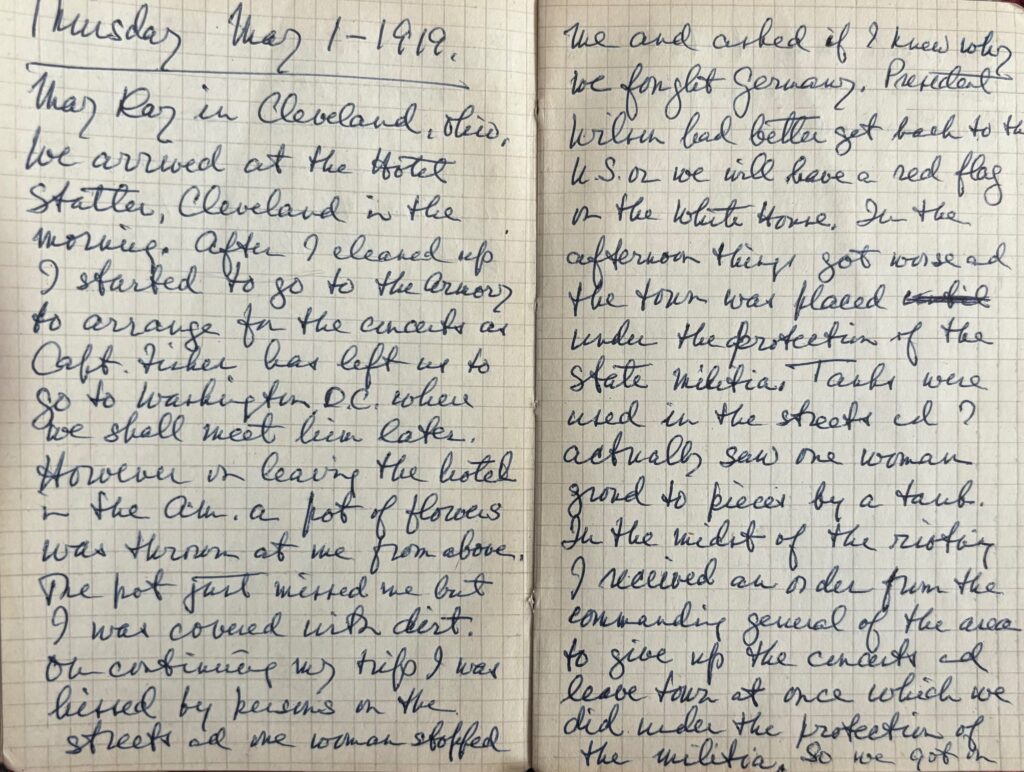
Thursday May 1 – 1919 – May Day in Cleveland, Ohio.
We arrived at the Hotel Statler, Cleveland in the morning. After I cleaned up I started to go to the Armory to arrange for the concerts, as Captain Fisher has left us to go to Washington DC where we shall meet him later. However in leaving the hotel in the AM a pot of flowers was thrown at me from above. The pot just missed me but I was covered with dirt. I was hissed by persons on the streets and one woman stopped me and asked if I knew why we fought Germany. ‘President Wilson had better get back to the US or we will have a red flag on the White House.’ In the afternoon things got worse and the town was placed under the protection of the State Militia. Tanks were used in the streets and I actually saw one woman ground to pieces by a tank. In the midst of the rioting I received an order from the Commanding General of the area to give up the concerts and leave town at once which we did under the protection of the Militia, so we got on our train and started east.
Monday May 5 – 1919 – Boston. …After this I rushed back and then started our parade preceded by mounted police instead of my marching band – they provided an open car for me to ride in at the very head of the line. We reached the State House and I was presented to Governor Calvin Coolidge and a State Senator… We played to thousands and thousands at that spot and after some more marching we stopped at the City Hall where I was presented to Mayor James Michael Curley who, among other remarks, made some uncomplimentary ones about Governor Coolidge.
Tuesday May 6 – 1919 – Checked in early to the hotel Kimball in Springfield Mass. In the morning the local Victory Loan Committee gave me a sort of breakfast-lunch attended by the entire committee. There was much drinking and one of the men expressed regret that they could not include me, as Massachusetts is very strict about giving liquor to men in uniform. However they said that they would give me a highball glass of ginger ale. When I started drinking it I noticed a task not at all like ginger ale and discovered that they had poured me a highball glass full of straight bourbon whiskey.
Sunday May 11 – 1919 – Working my head off getting a payroll for the men and issuing passes. The payroll is difficult for it involves insurance and allotment. Washington is like an old mausoleum and the War Department clerks are so stupid. Saturday I went to a special meeting in the Congress where they were debating and discussing ‘Shall the soldier be issued one shirt or two and should he wear one while the other is being washed in an exchange laundry or should he have but one and wash that when he can and thereby making use of the 1/6 of the unconsumed portion of the cooks ten-day ration of soap…’
Friday June 15 – 1919 – End of Word War 1 Diaries. Glory be to God!
______________
A year and a half before he died he wrote a letter to the Veterans Administration. It’s similar to letters he’d been writing once every decade, since WW1 was over: where are all the benefits?
He’d received a single check in 1924 for the ‘World War Adjusted Compensation Act’ – $1565. Today it would be worth about $29,000 – but so what! My Daddy had followed the rules, seen and heard thousands of bloody deaths, of bullets and bombs and gas masks. Once he spent all night listening as ‘987 shell explosions’ were counted… And to me he seemed so SAD: there’s always a certain sadness when he’s talking about WW1. Yes, ‘Washington is like an old mausoleum and the War Department clerks are so stupid.’
Oh, he received medals and ribbons, but much better were his elegant awards from France – there were many of them. France thanked and thanked and THANKED him.


^^^^^^^^^^^^^^^^^^^^^^^^^^^^^^^^^^^^^^^^^^^